A million treatments recorded, and the national picture built from them.
A Royal College asked its members to record every treatment they give, anonymously, so the profession could show government, funders and researchers what it does and how well it works. We built that registry, and we've kept it running for nearly fifteen years.
- Client
- A Royal College, the professional body for a clinical profession
- Used by
- Practitioners at 500 centres across the UK, the College, researchers and patients
- Hosting
- On the College's own database, with development and support from us
- Looked after
- Since 2012, kept running throughout
The registry at a glance
Figures from the live system, with data going back to 2012.
A profession that needs to prove what it does.
Government, funders and commissioners want evidence: how many patients are treated, with what, by whom, and with what result. Without it, a profession's case for funding and research rests on anecdote.
That evidence is spread across hundreds of clinics, NHS and private, and it is about patients, so it has to be collected without identifying anyone. It also has to be worth a busy clinician's time to record.
One national registry that's useful to every clinician in it.
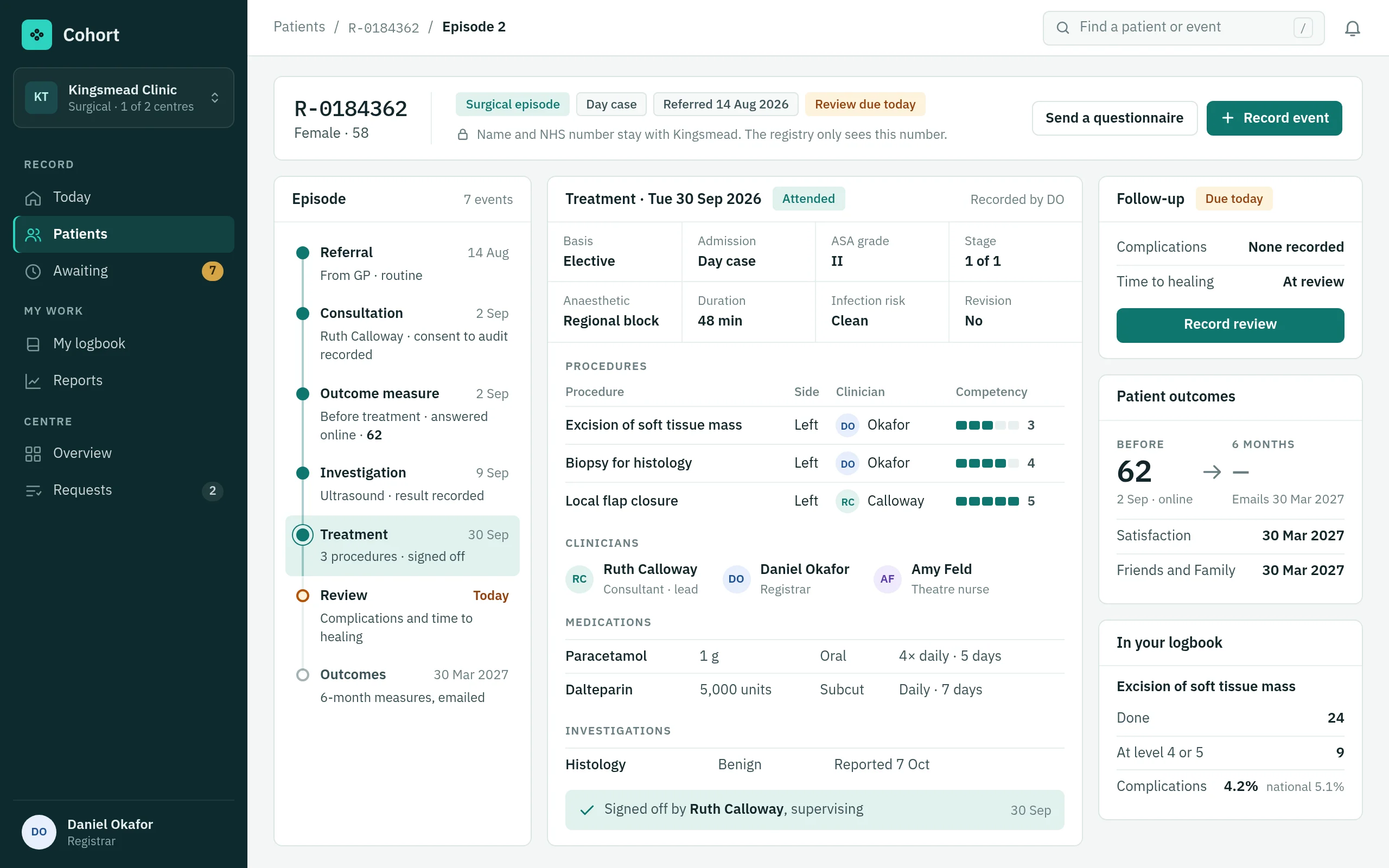
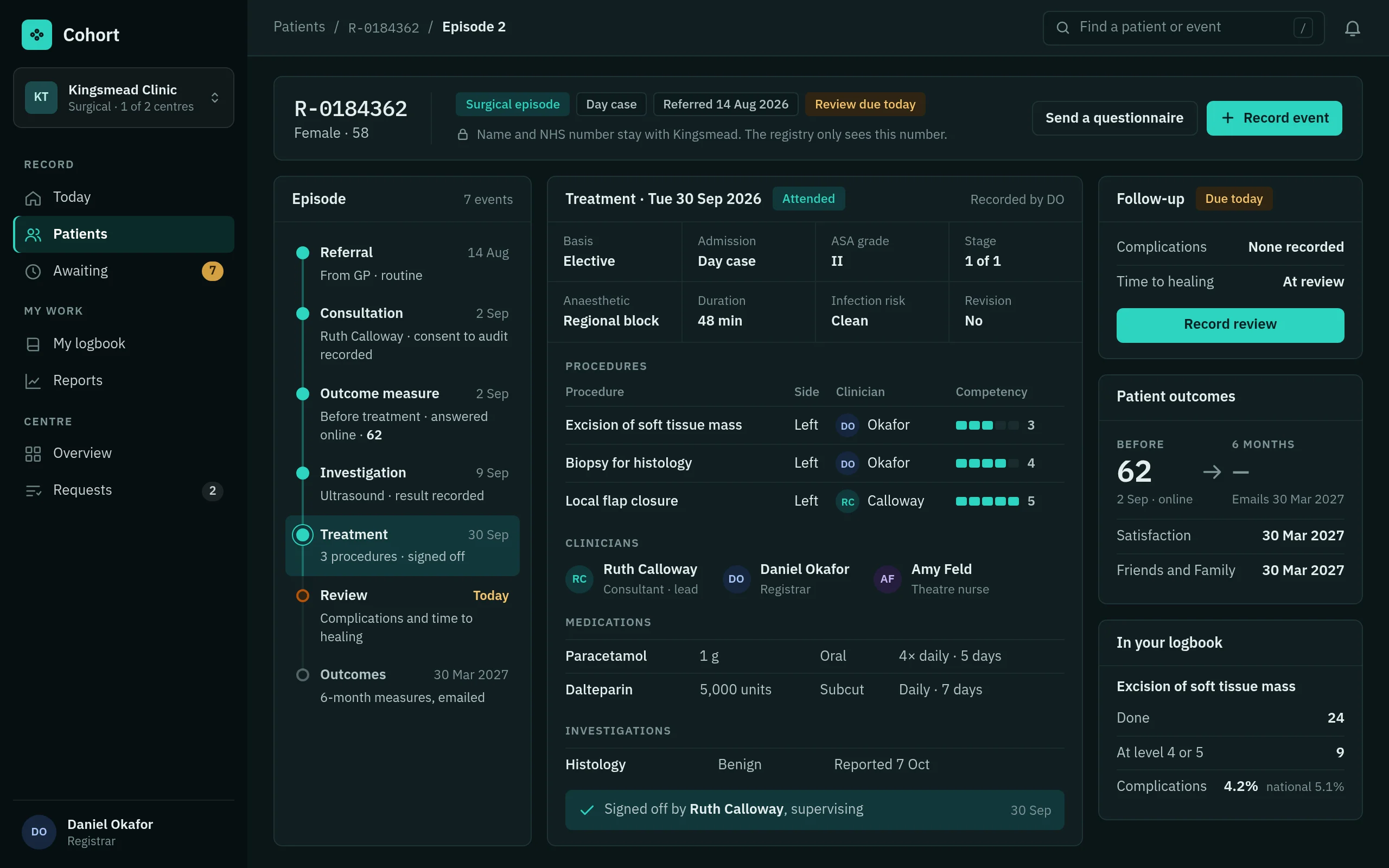
Practitioners record each episode of care as it happens, from referral to the last follow-up, against shared lists of procedures, medications and complications. Patients tell us how it went, online.
The College turns it into national statistics and research cohorts. Each practitioner gets their own logbook of workload, outcomes and experience, which is the reason they keep it up to date.
What it does
From a single treatment in one clinic to the national figures, in one system.
A logbook that keeps itself
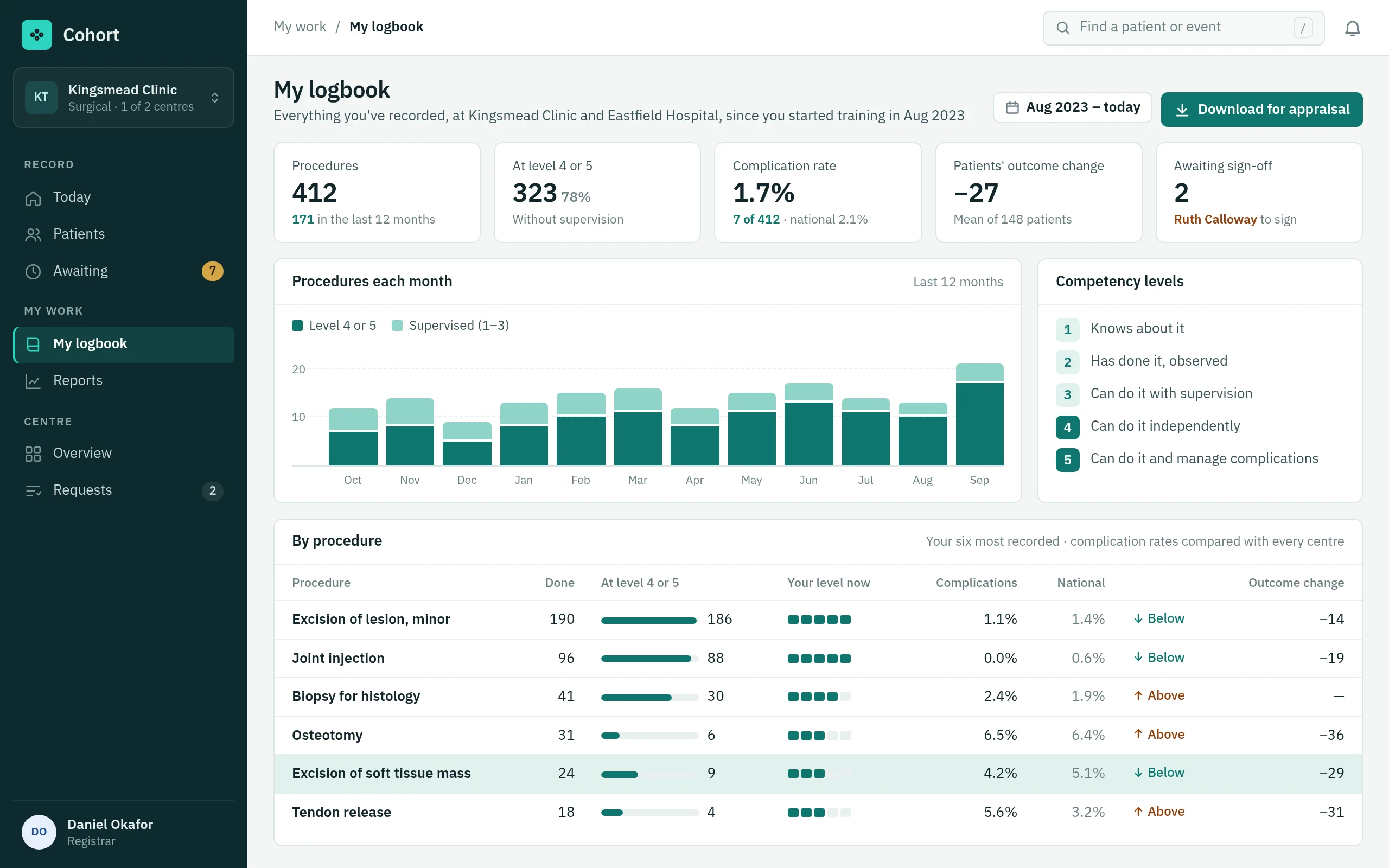
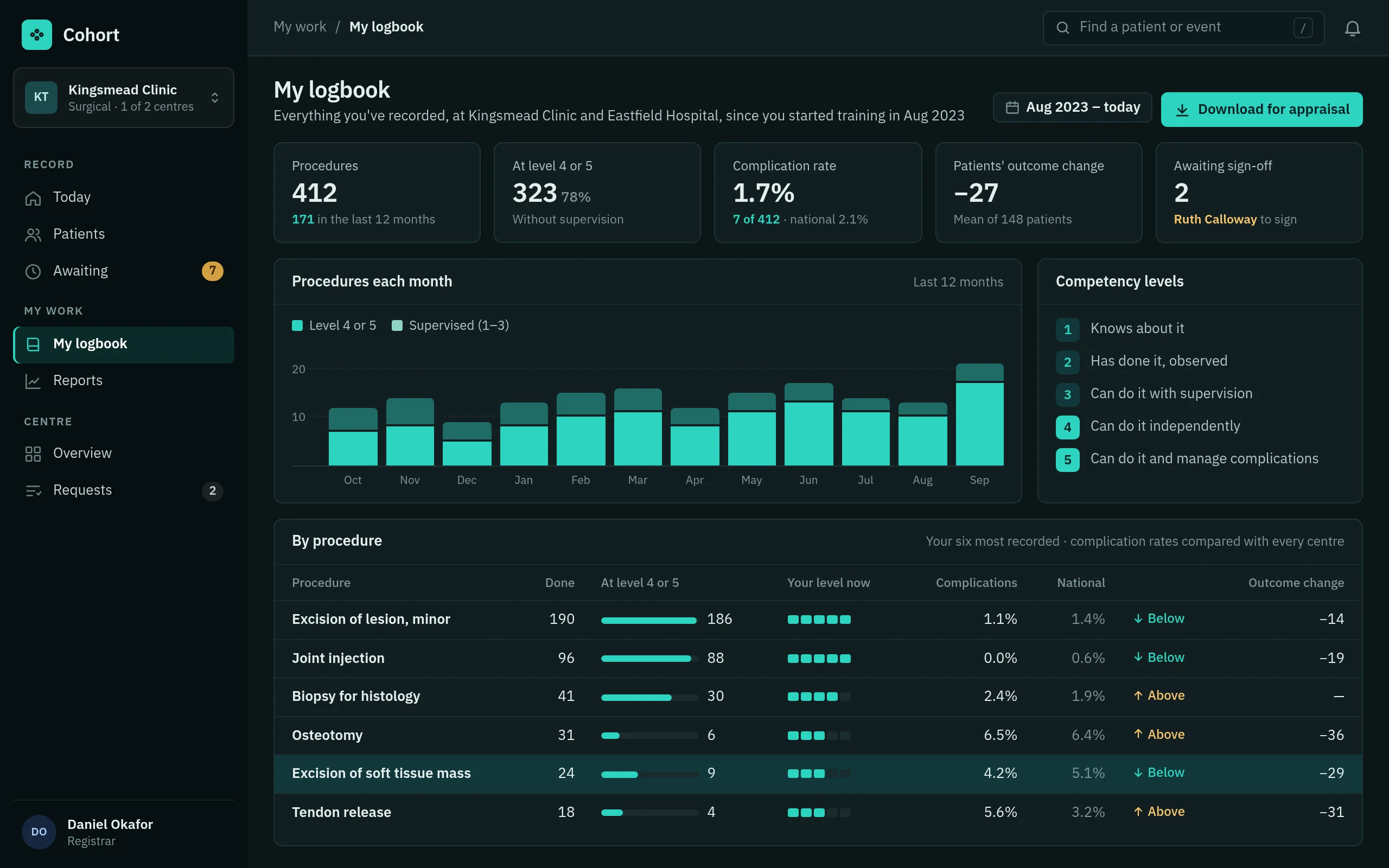
Everything a practitioner records adds to their own logbook: what they did, how often, at what level of competence and with what outcome. It's ready for appraisal, revalidation and training reviews.
- Procedures by type and competency level, from observing to independent practice
- Complication rates and patient-reported outcomes for their own patients
- Supervisor sign-off recorded against each treatment
- Their workload over time, at every centre they work at
Outcomes measured by the people who matter
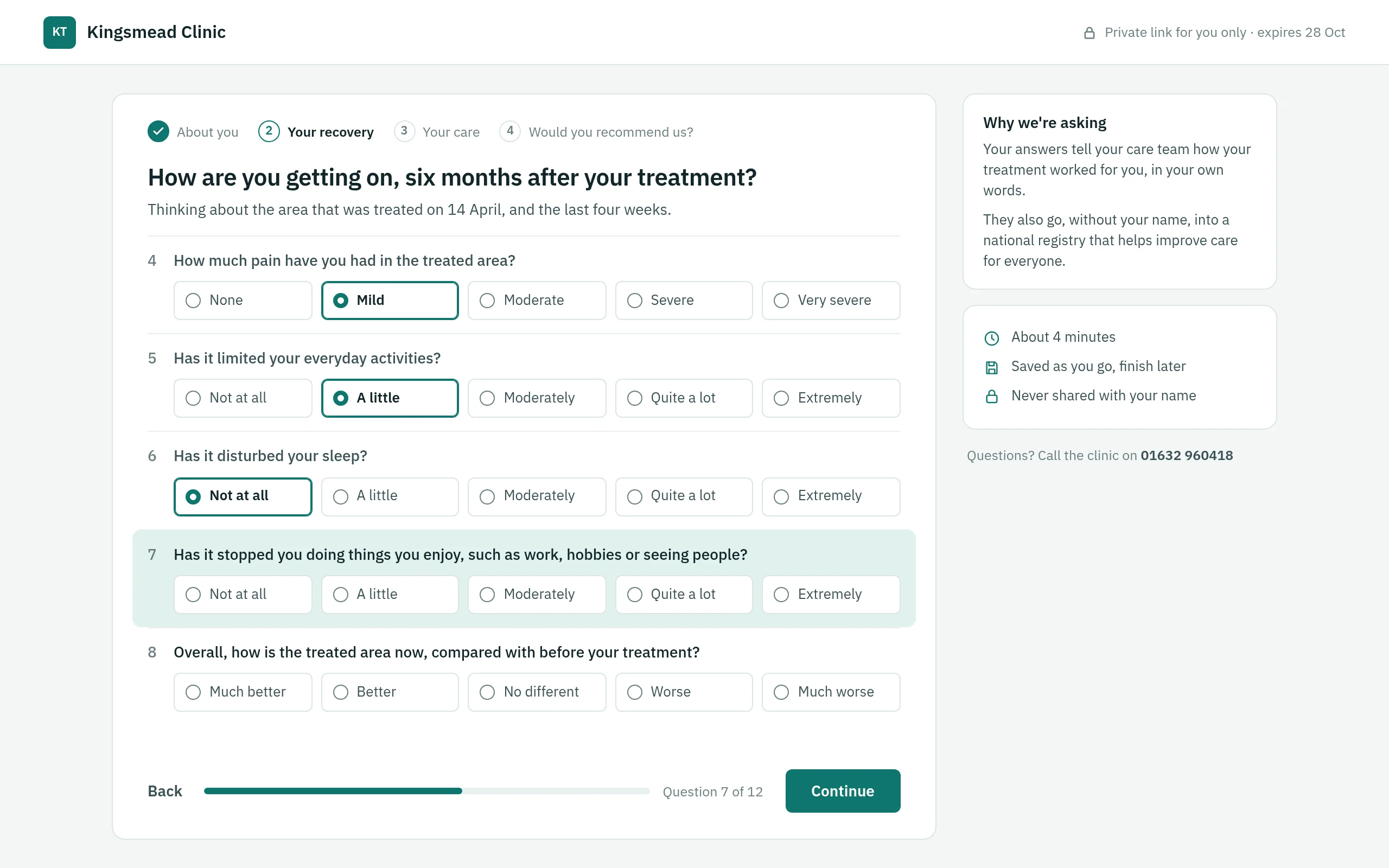
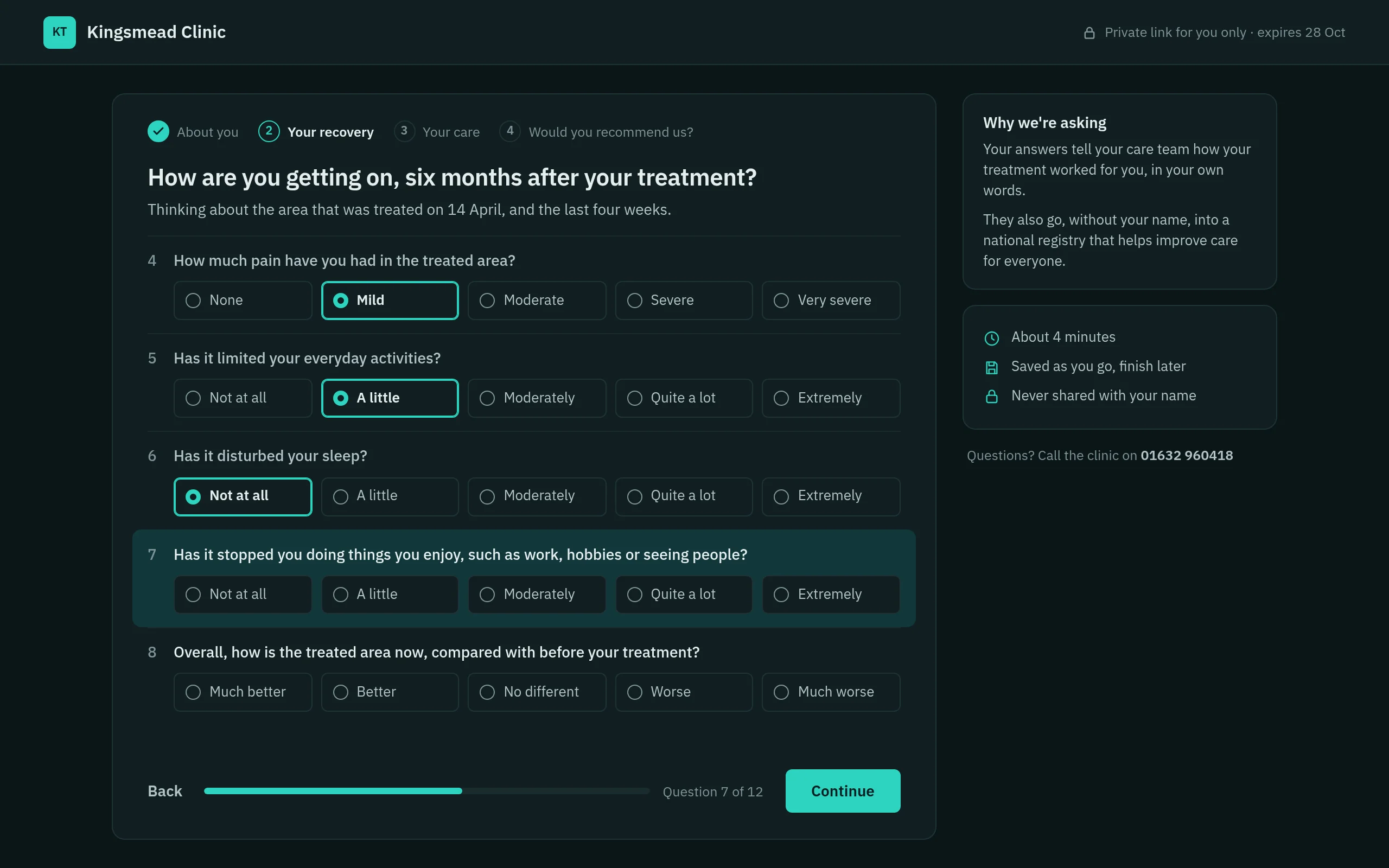
Recognised outcome questionnaires are emailed to patients at the right point in their care, and the answers land on their episode. Nobody has to type up a paper form.
- Standard outcome measures before and after treatment
- Patient satisfaction, and the NHS Friends and Family Test
- Sent on a schedule, with each centre's own wording
- Lists of what's still awaited, so follow-ups aren't missed
The profession's figures, on demand
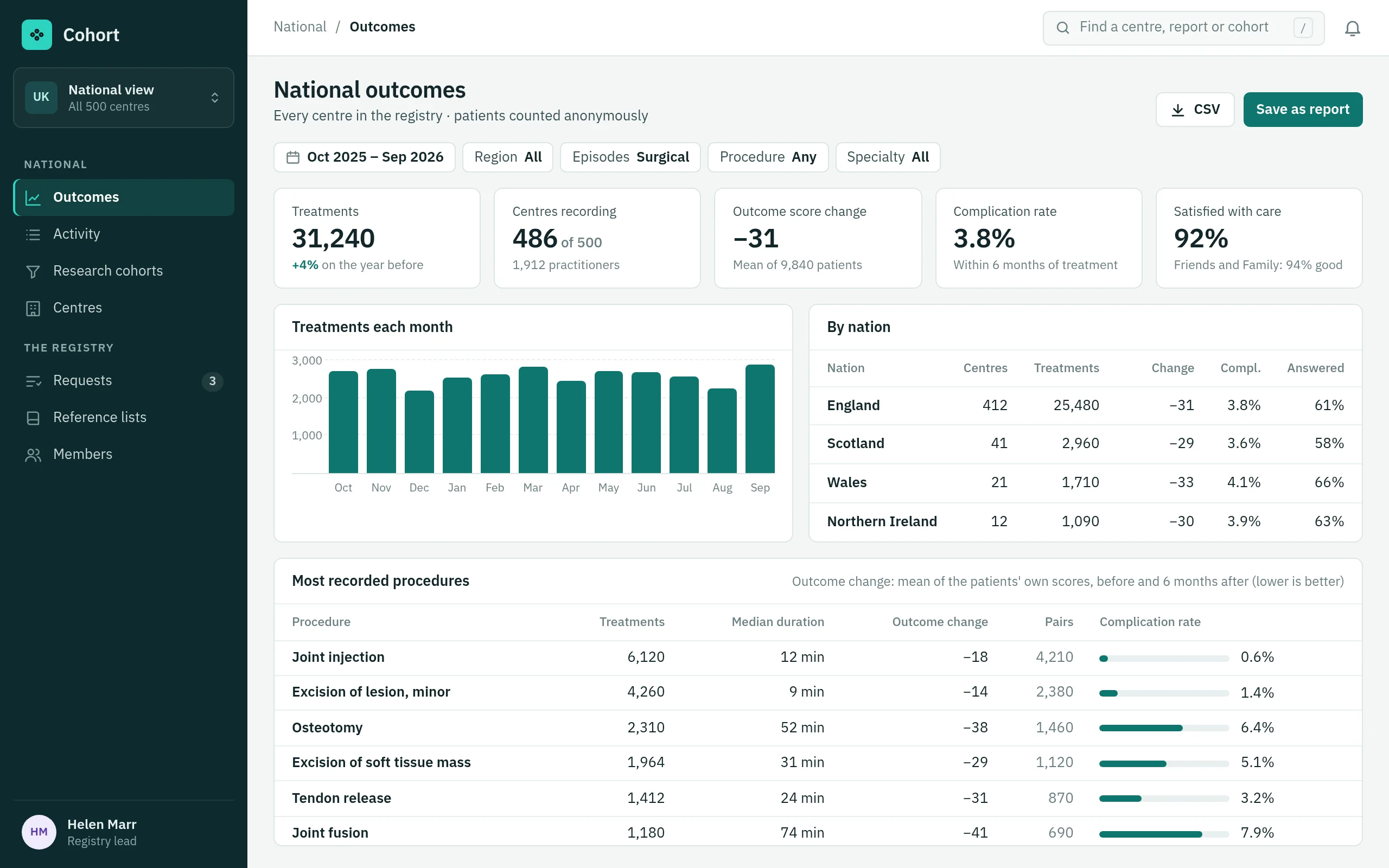
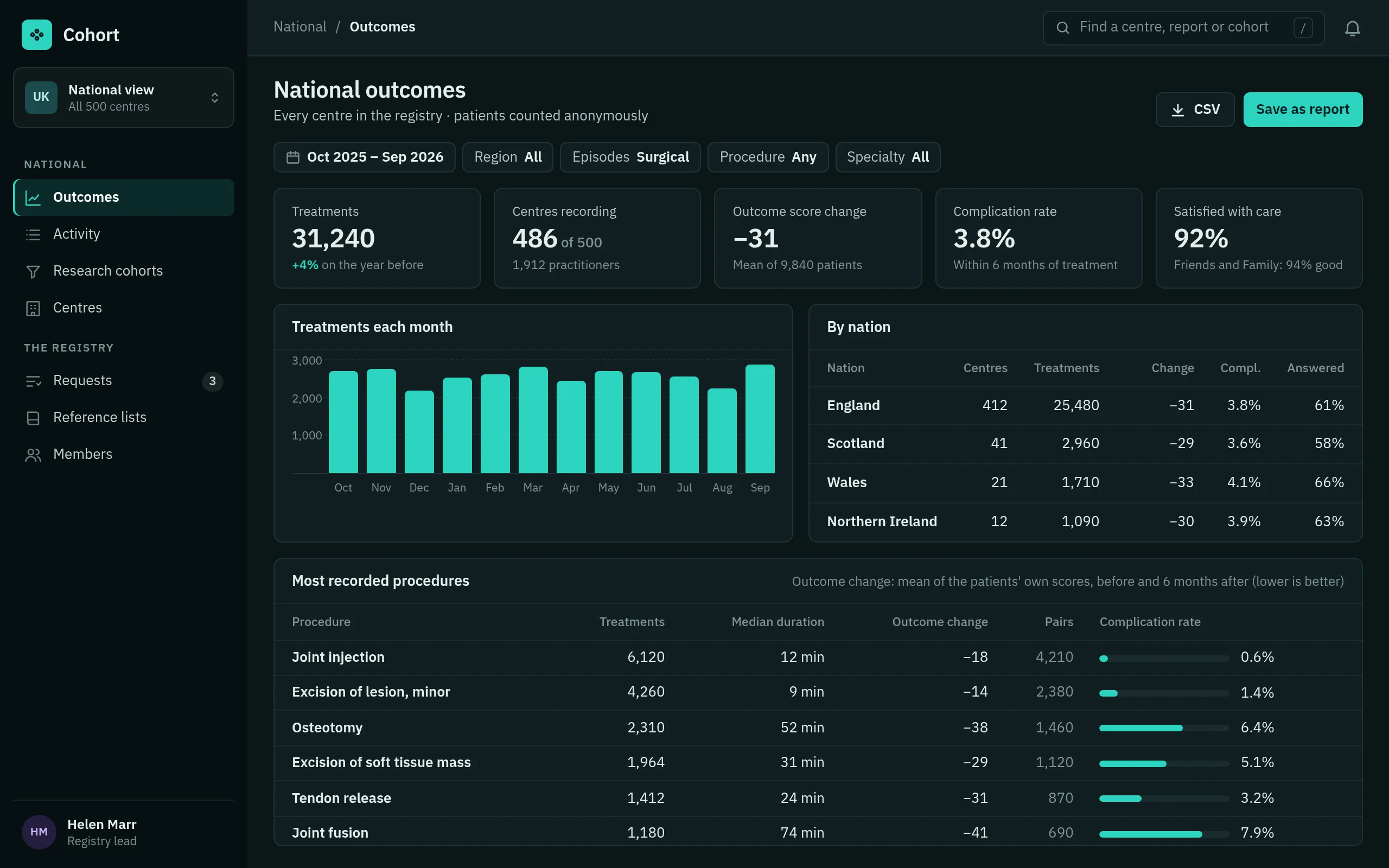
The College reports across every centre: activity, outcomes, complications and time to healing, by region, specialty or procedure. These are the figures that go to government and funding bodies.
- Nearly seventy reports on activity, outcomes and research
- Filtered by date, region, centre, clinician, procedure or complication
- Change in outcome scores, satisfaction and complication rates
- Each person sees what their role allows: their own work, their centre or the nation
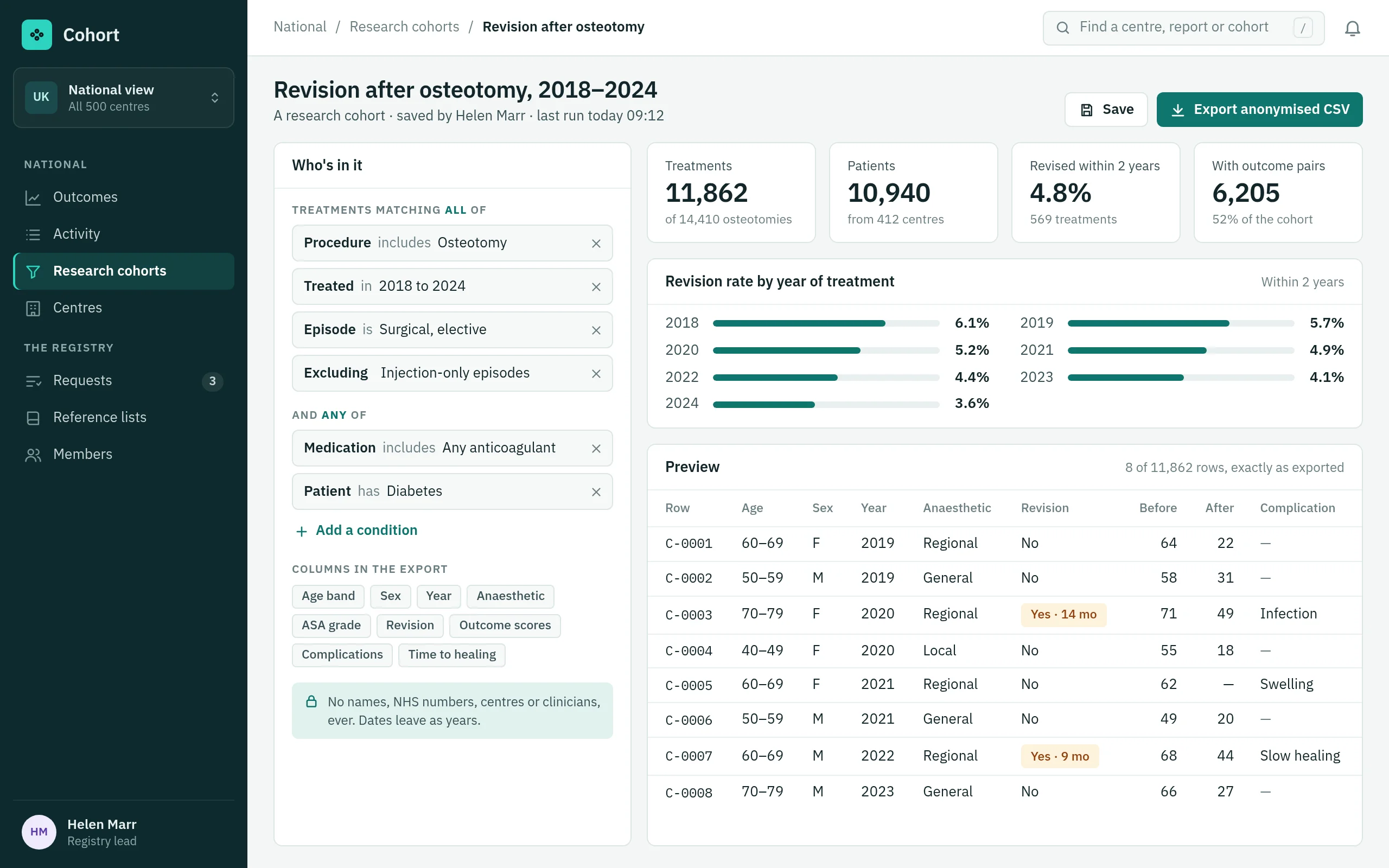
Research cohorts in minutes, not months
A decade of consistently coded treatments is a research resource in itself. Researchers define a cohort by procedure, medication, complication or patient group and take it away anonymised.
- Cohorts built from any combination of procedures, medications and complications
- Revision and medication studies across every centre
- Exports that never carry a patient's identity
- Evidence to help set the profession's research priorities
Each centre looks after its own
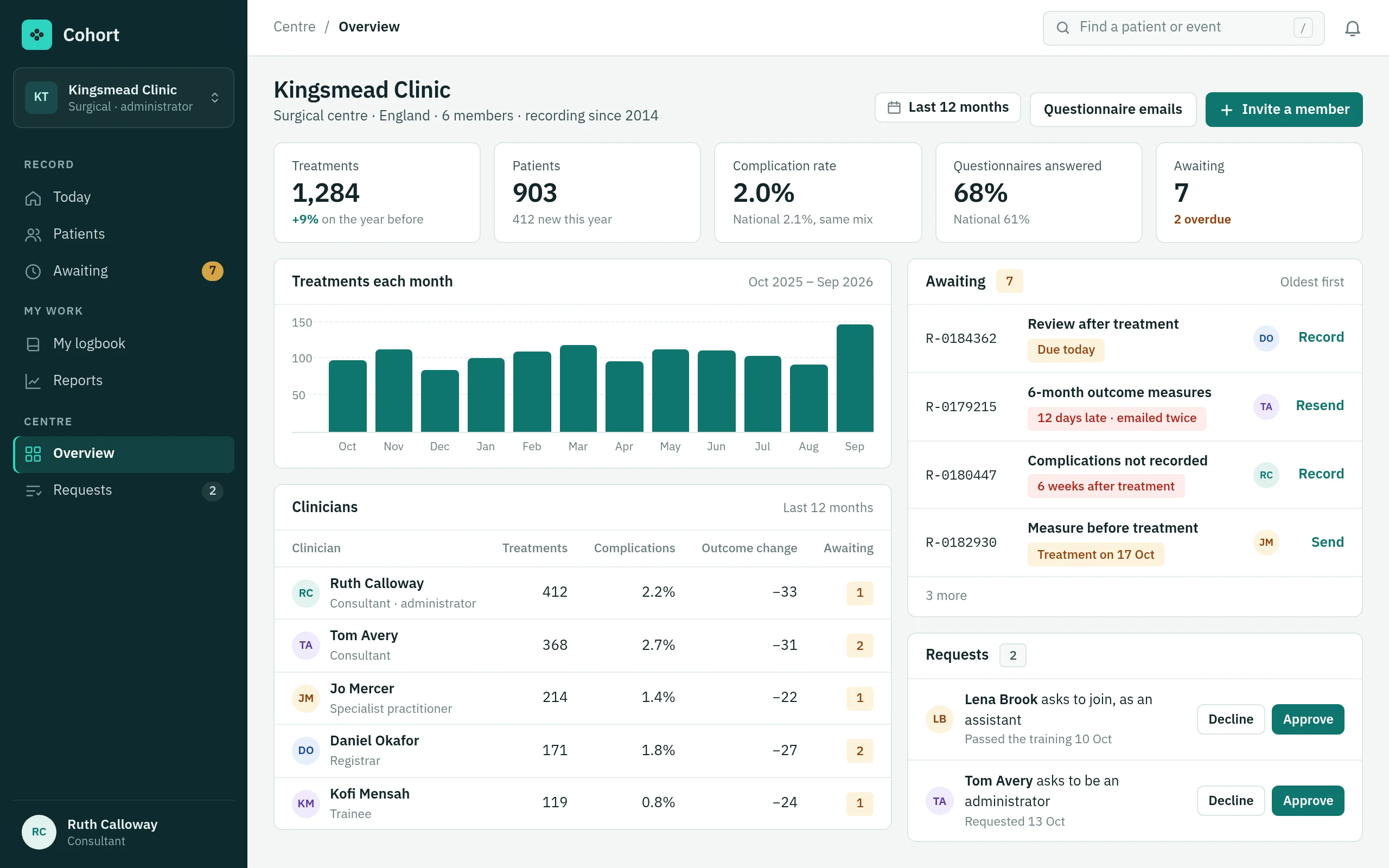
Centre administrators see their team's activity and outcomes, chase what's missing, and approve who joins. The College approves new centres.
- The centre's activity and outcomes, clinician by clinician
- Questionnaires and complications still awaited
- Requests to join or change role, approved by the centre
- Practitioners who work at several centres switch between them
The details that make it work
Less visible than the headline features, but they're why the College, its members and patients trust the figures.
Anonymous by design
Nationally, a patient is a number, a date of birth and a sex. Names and NHS numbers stay with the centre that treats them, and can be withheld altogether.
Their database, our support
Because of what it holds, the database is hosted by the College itself. We develop and support the system around it, without the data ever leaving their hands.
Consent first
A patient can't be added until their consent to anonymous audit has been recorded.
Trained before they record
New users are checked against the membership list, then watch the training and pass a short test before they can record a single treatment.
One language for the profession
Over 500 procedures, 240 diagnoses, 117 medications and 51 coded complications, kept by the College so every centre records the same way.
Clinical detail where it counts
Anaesthetic, infection risk and ASA grade for surgery; blood pressure, circulation and wound measures for high-risk patients.
Complications followed up
Every complication is tied to the treatment and procedure it followed, along with the time to healing, so outcomes can be traced back to what was done.
Run by the College
New centres, members, reference lists and the wording of every email to patients are all managed in the system, by the College and its centres.
A simpler sister app
Non-surgical practitioners don't need every field, so a sister application gives them a much simpler way to record their work into the same national data.
Big reports, no slowdown
National reports over a million events are built in stages, so a year-end report never slows the system for the clinicians using it.
Nearly fifteen years, and still growing.
The registry has been in daily use since 2012, through new questionnaires, new specialties and a move to the College's own hosting, without ever stopping.
- 2012 Where it started A national registry of treatments, with outcomes and complications, for every member to record into.
- 2015 Patients answer online Outcome questionnaires emailed to patients, then sent automatically on a schedule.
- 2019 Reporting for the nation A new reporting engine for national statistics and research cohorts across the whole history.
- 2021 Beyond surgery, and in-house hosting A simpler sister app for non-surgical practitioners, and the database moved to the College's own hosting.
- 2025 High-risk patients New clinical measures, to evidence care for the patients most at risk.