Every project, part and hour, in one place.
An engineering company designs and builds one-off machines for its customers. We built the system that runs the work behind them, from the first enquiry and the parts on order to the last hour booked.
- Client
- A UK engineering company building bespoke machinery
- Used by
- Engineers, purchasing, stores, accounts, sales and directors
- Replaced
- An ageing job system and a standalone contact manager
- Looked after
- Since 2018, with a new interface in 2024
The system at a glance
Figures from the live system, which carries years of history from before it was built.
Every machine is a one-off, so every project needs its own numbers.
A single project draws on mechanical, electrical and software engineers, hundreds of bought-in parts from dozens of suppliers, and months of work.
Time sheets, part lists, purchase orders and sales enquiries lived in separate places. Finding out whether a project was on budget meant pulling them together by hand, and by the time the picture was complete, it was already out of date.
One system the whole company works in, every day.
Part lists turn into purchase orders, deliveries update the parts they fill, and time cards land against the project they were worked on.
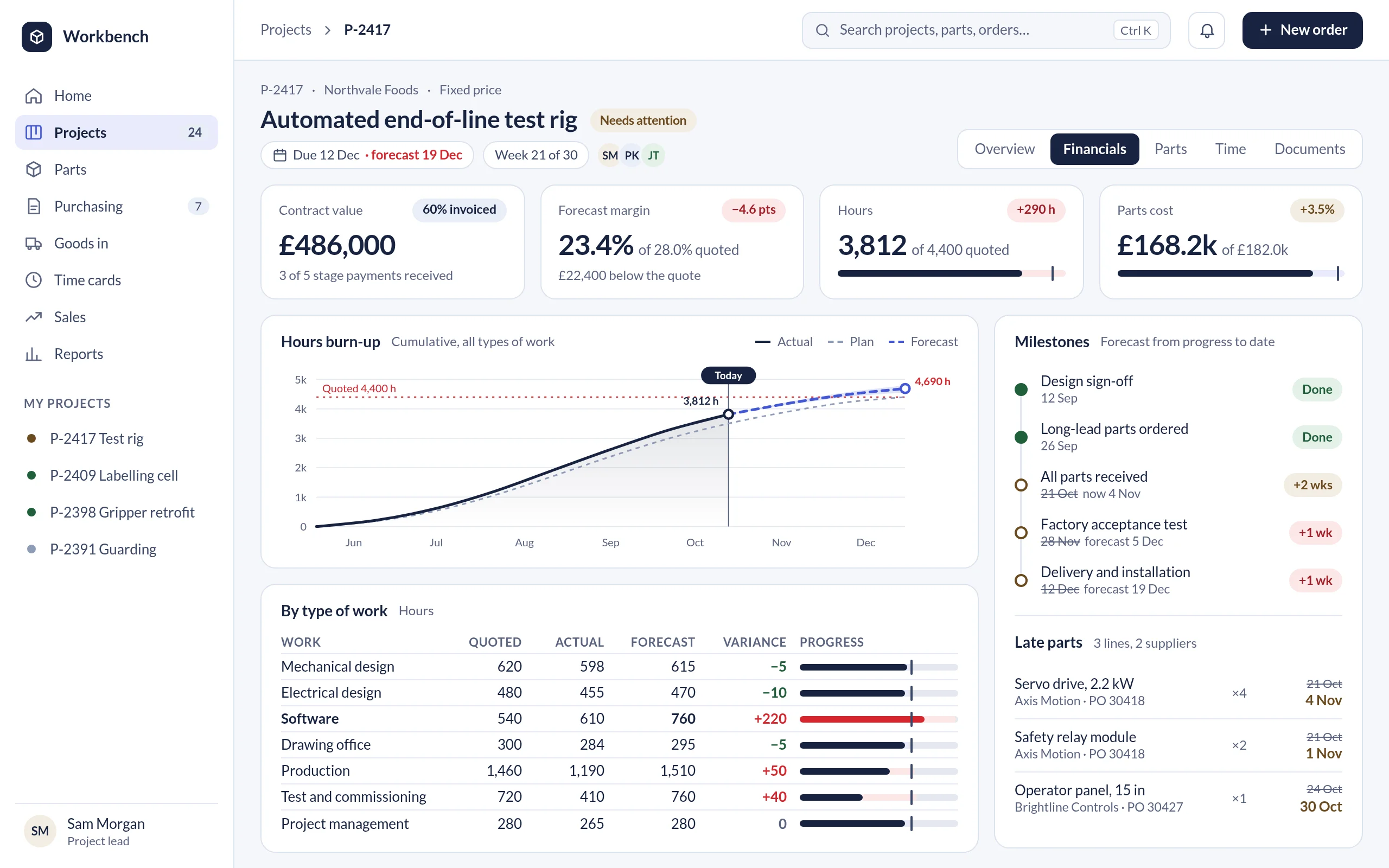
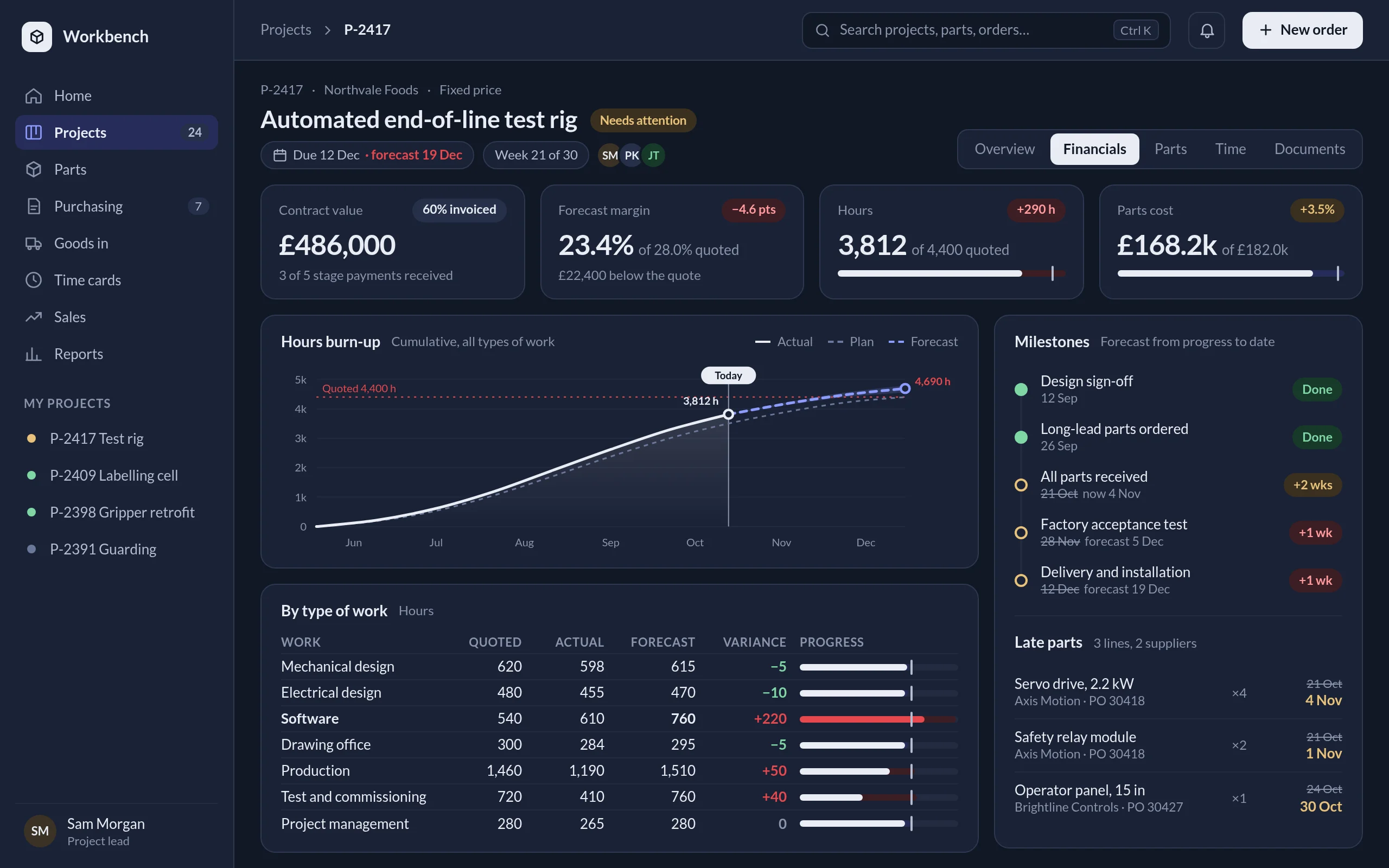
Every project shows live figures for hours and parts: what was quoted, what has been spent and where it's heading. Sales enquiries run through the same system and become projects when they're won.
What it does
The work of a project, from first enquiry to final delivery, in one place.
Know where every project stands
Quoted, spent and forecast, for hours and for parts, kept up to date as the work happens rather than worked out at the end.
- Quoted, adjusted, actual and forecast hours across eleven kinds of work
- Parts cost split into mechanical, electrical and other, including carriage
- Required, predicted and actual delivery dates side by side
- Lock a project for new parts or new time once that stage is done
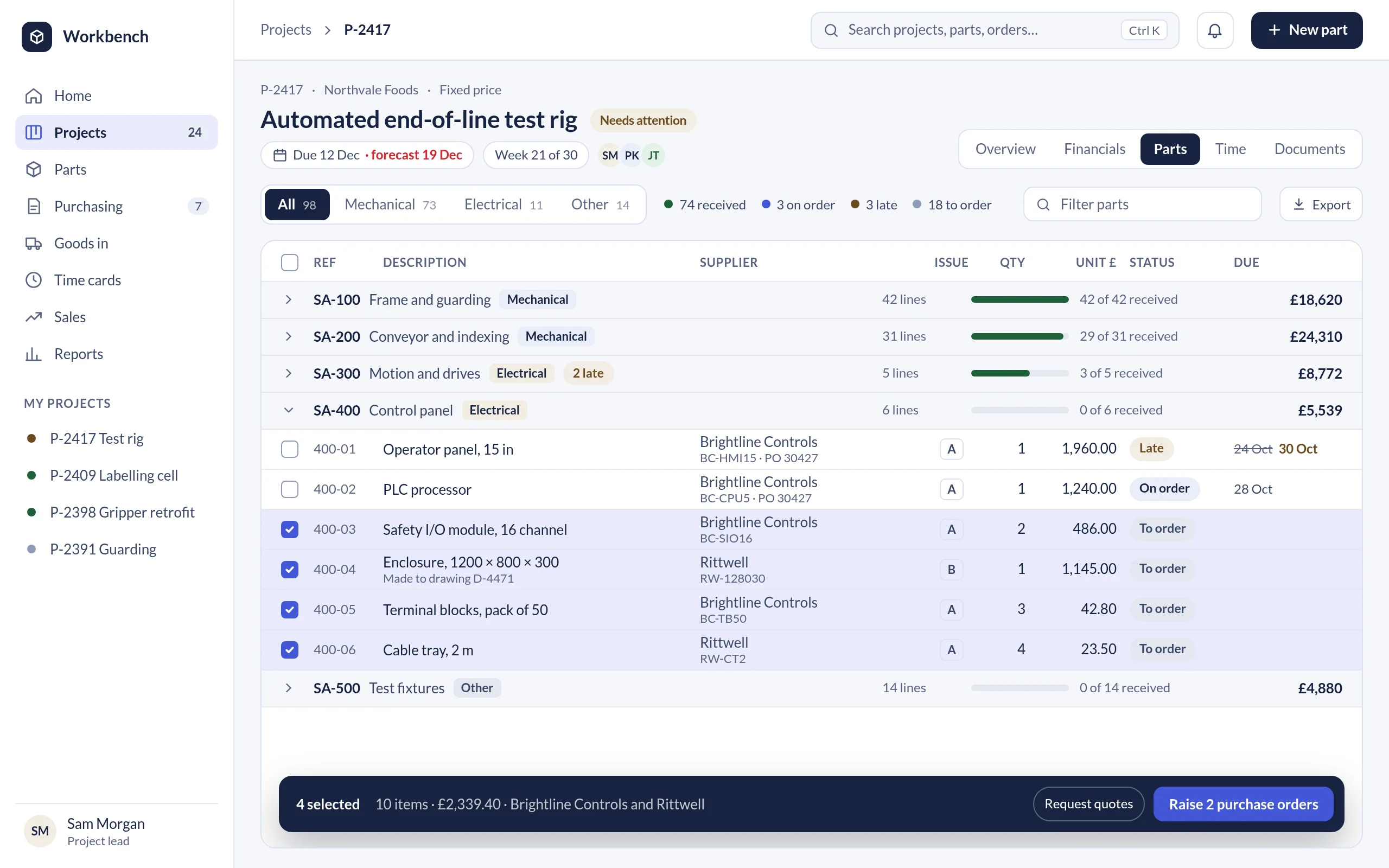
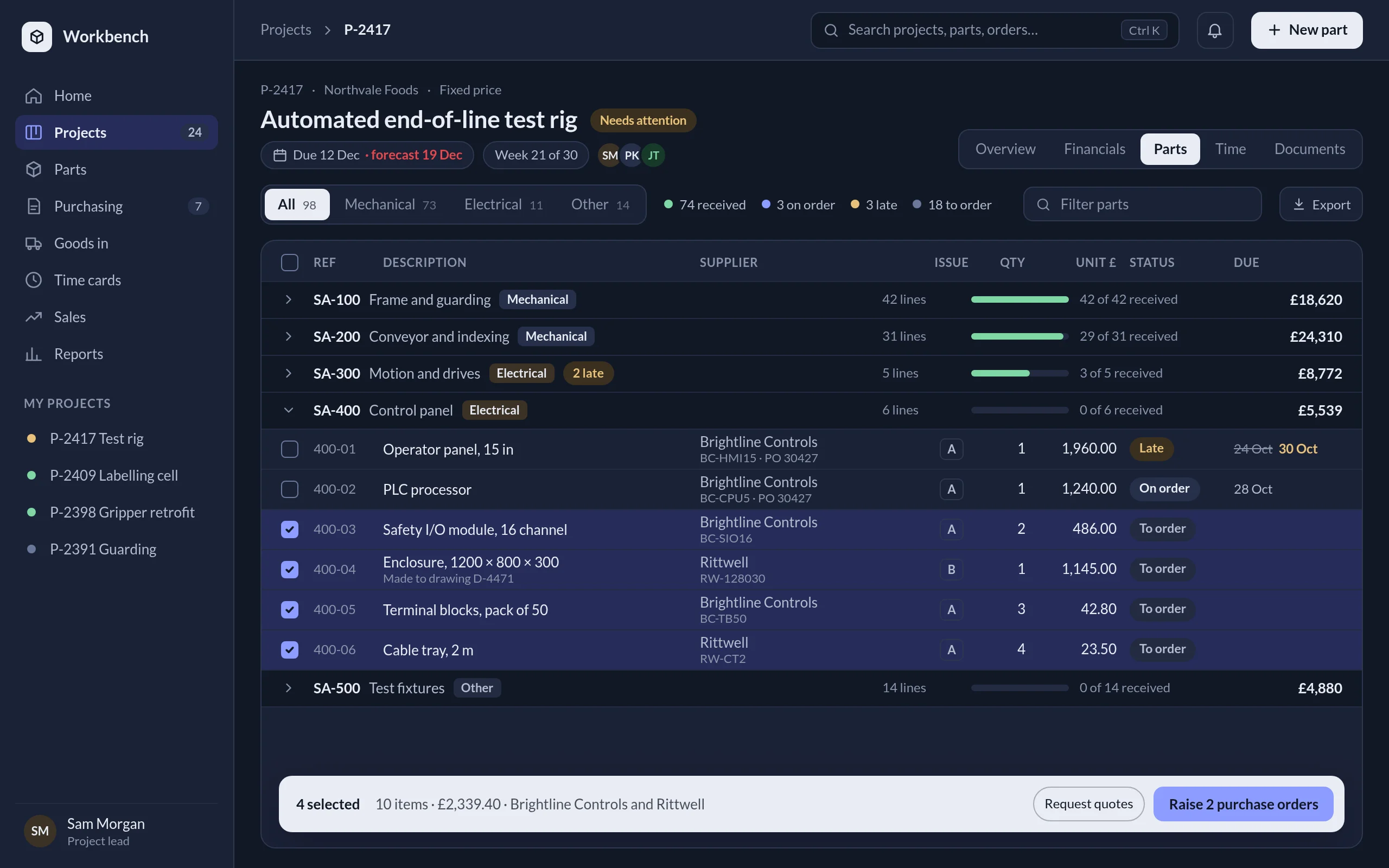
From part list to purchase order to goods in
Engineers list the parts, purchasing orders them and stores books them in. Each part always shows how many are needed, ordered, received and made.
- Part lists with sub-assemblies, drawing issue levels and spares
- Orders that span several projects, in any currency
- Two-stage approval, first to order and then for payment
- Deliveries received and inspected against each order line
- Instant search across nearly a quarter of a million parts
Time cards people actually complete
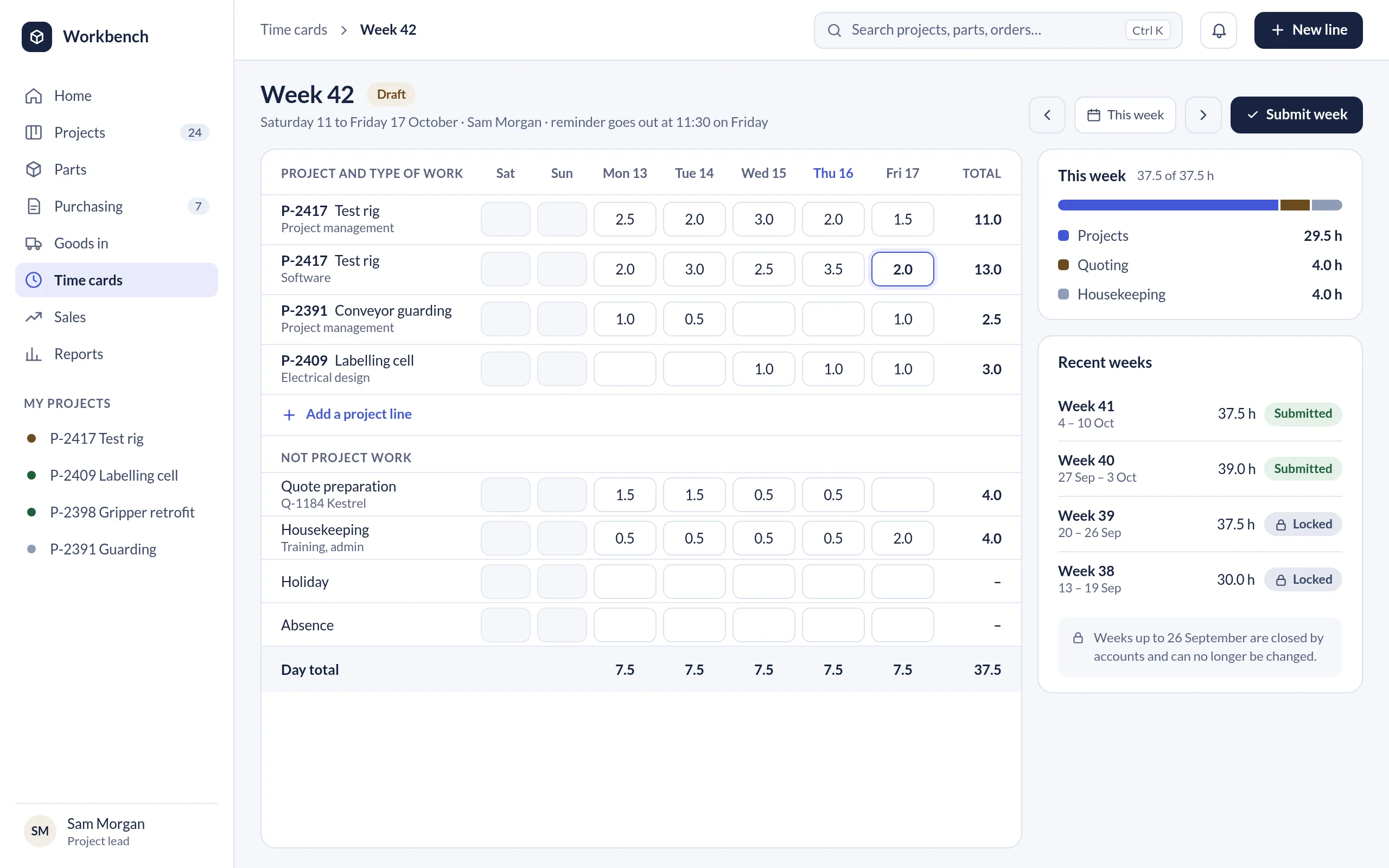
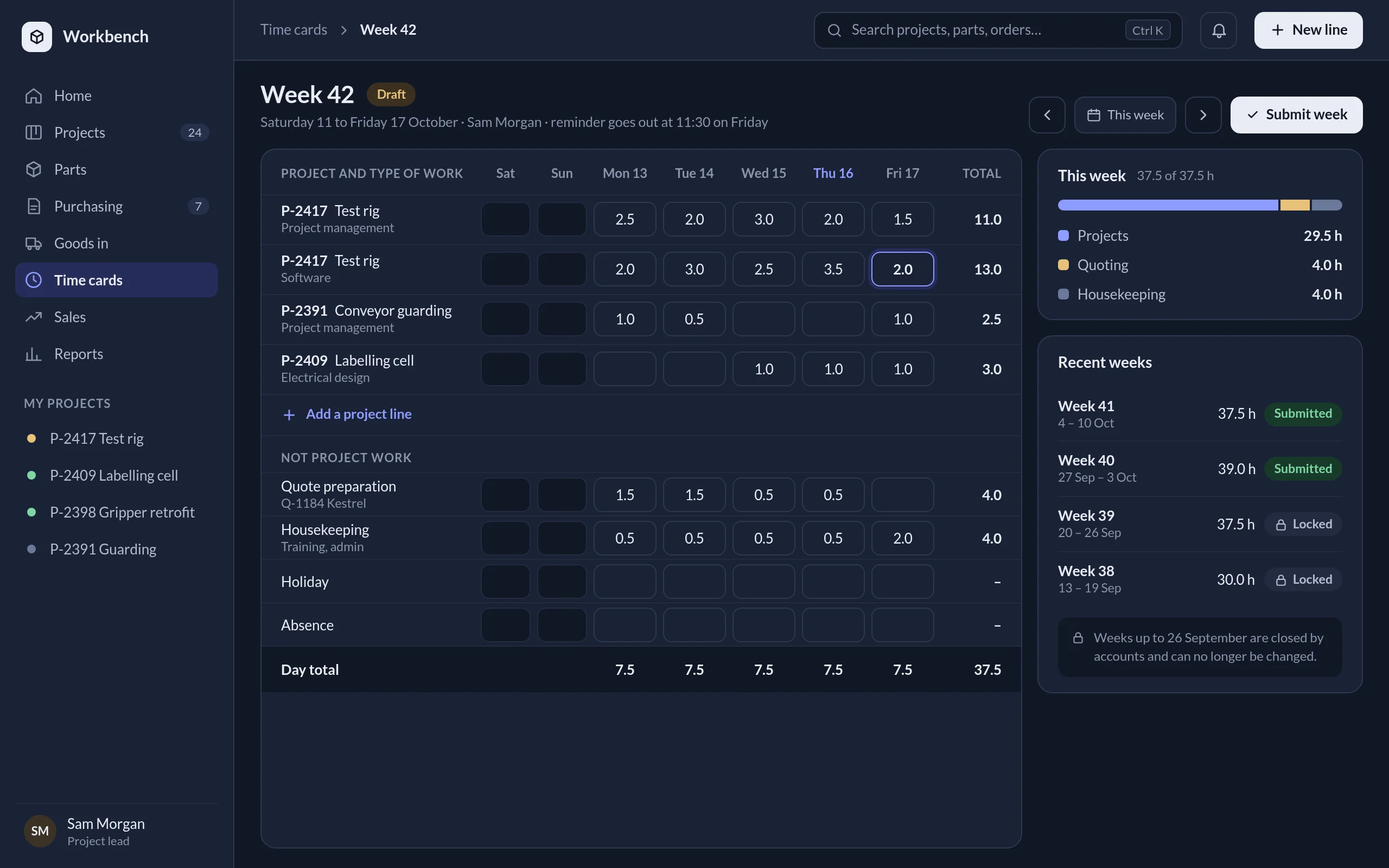
A simple weekly grid of hours by project and type of work, which takes care of the nagging so the office doesn't have to.
- Next week's card is ready for everyone automatically
- Reminders go out only at the end of the week, and only for cards still outstanding
- Holiday, absence and quoting time recorded separately from project work
- Past weeks are locked once accounts have closed them
A sales pipeline that turns into the project
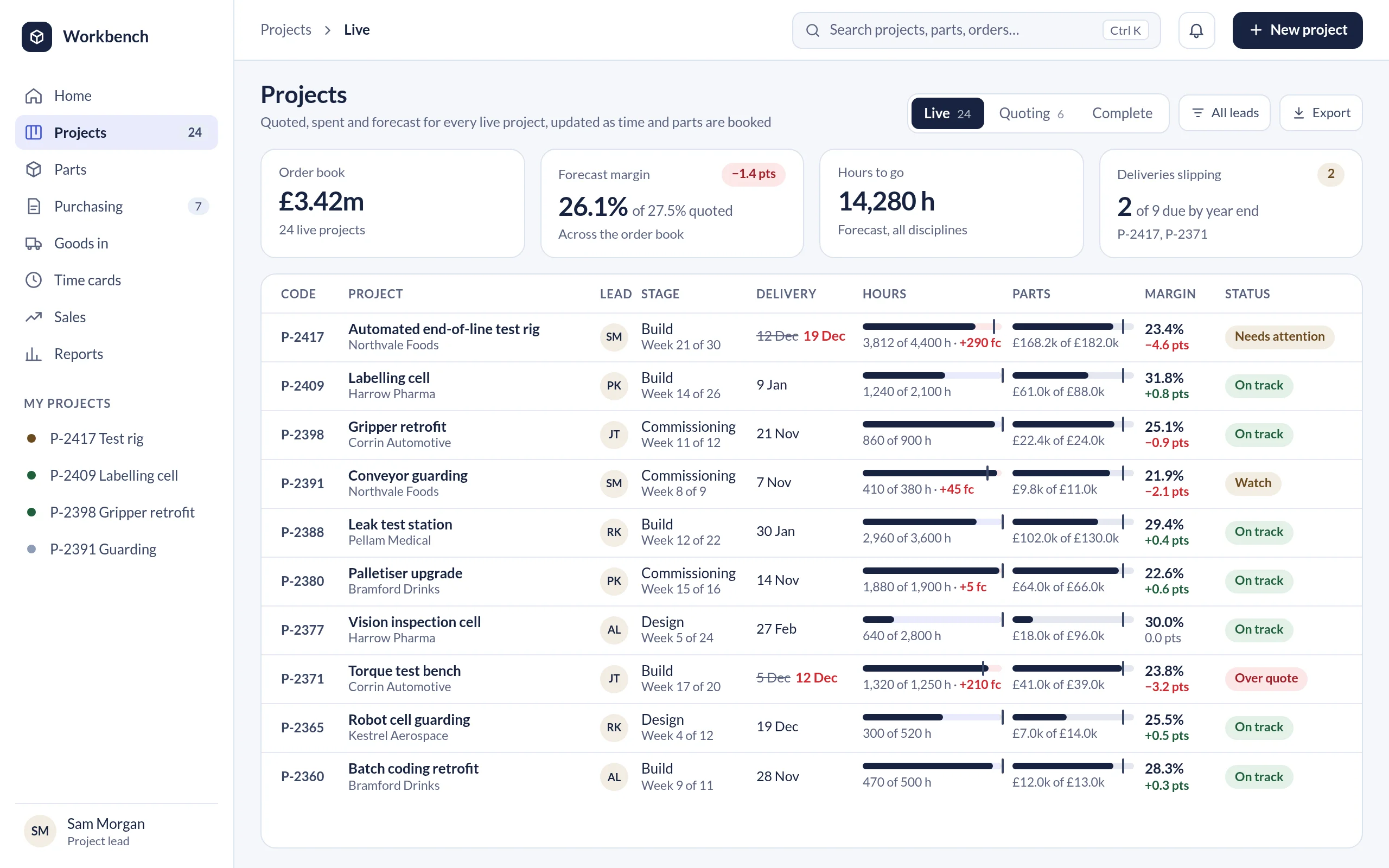
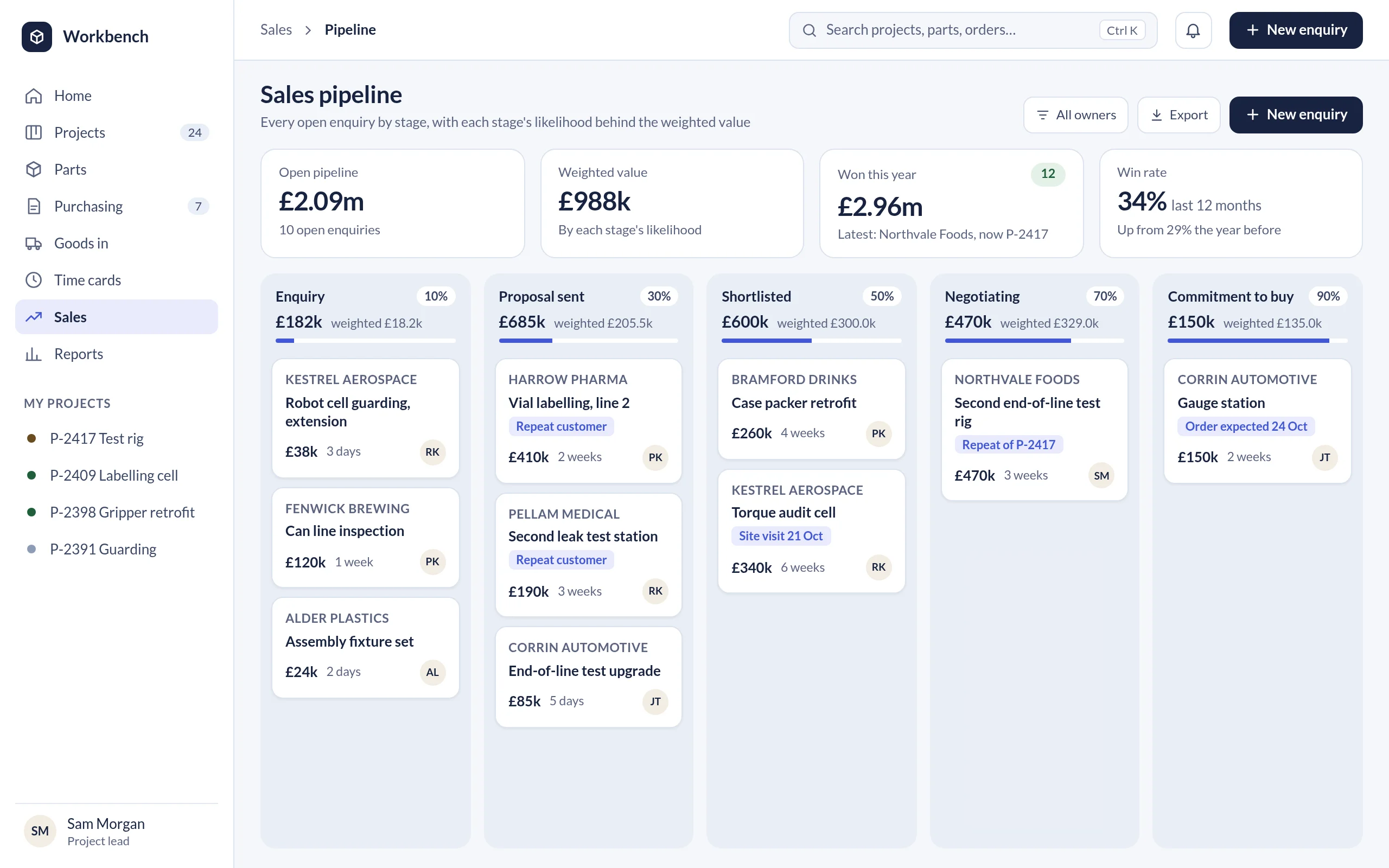
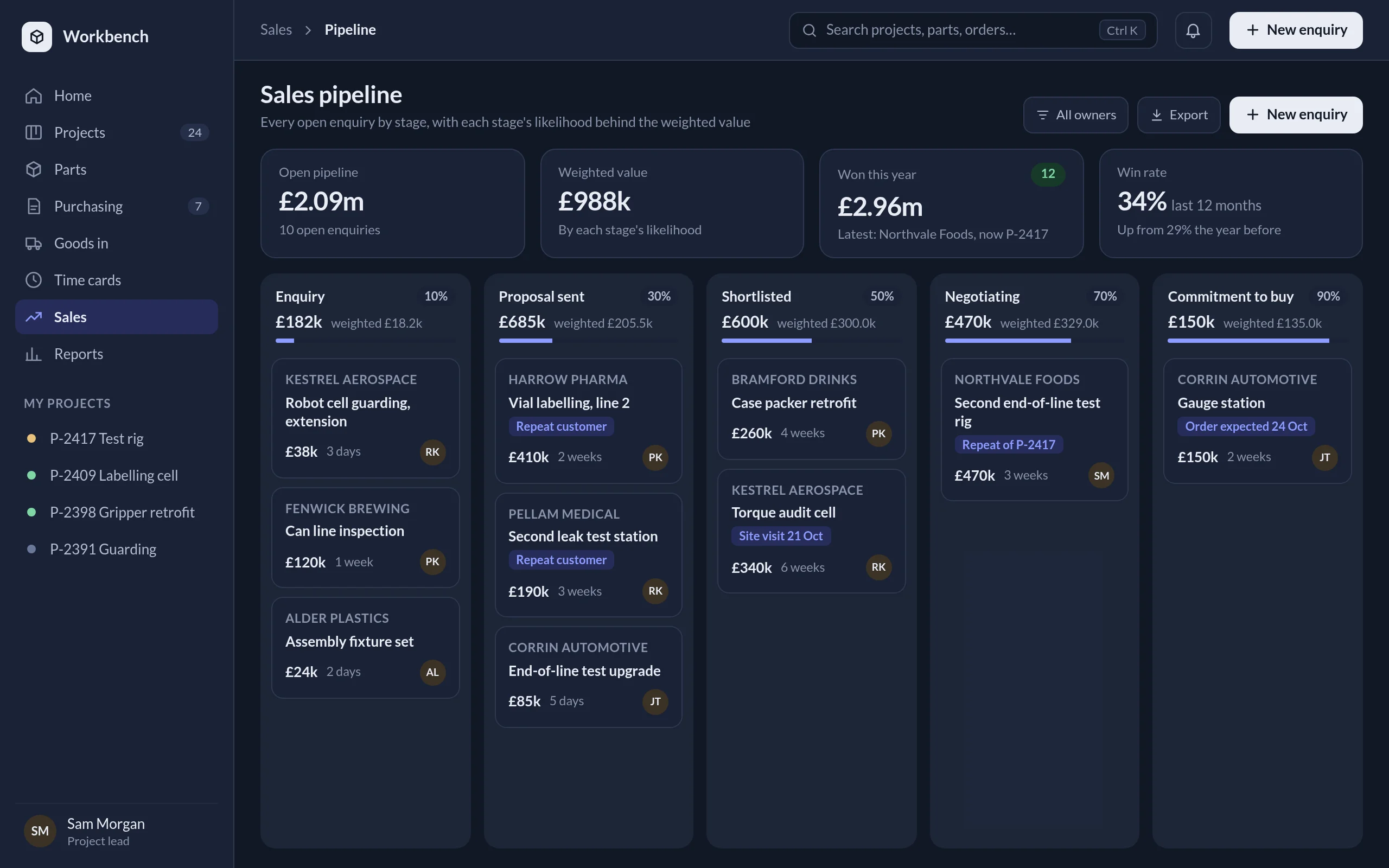
Enquiries are tracked in the same system as the work, so a won order carries straight on as a project and nothing is typed in twice.
- Companies, contacts and enquiries in one place
- Thirteen stages, each with a likelihood, for a weighted pipeline value
- Won enquiries linked to their project and order
- A history of spares quotes by customer and part
The right report for every role
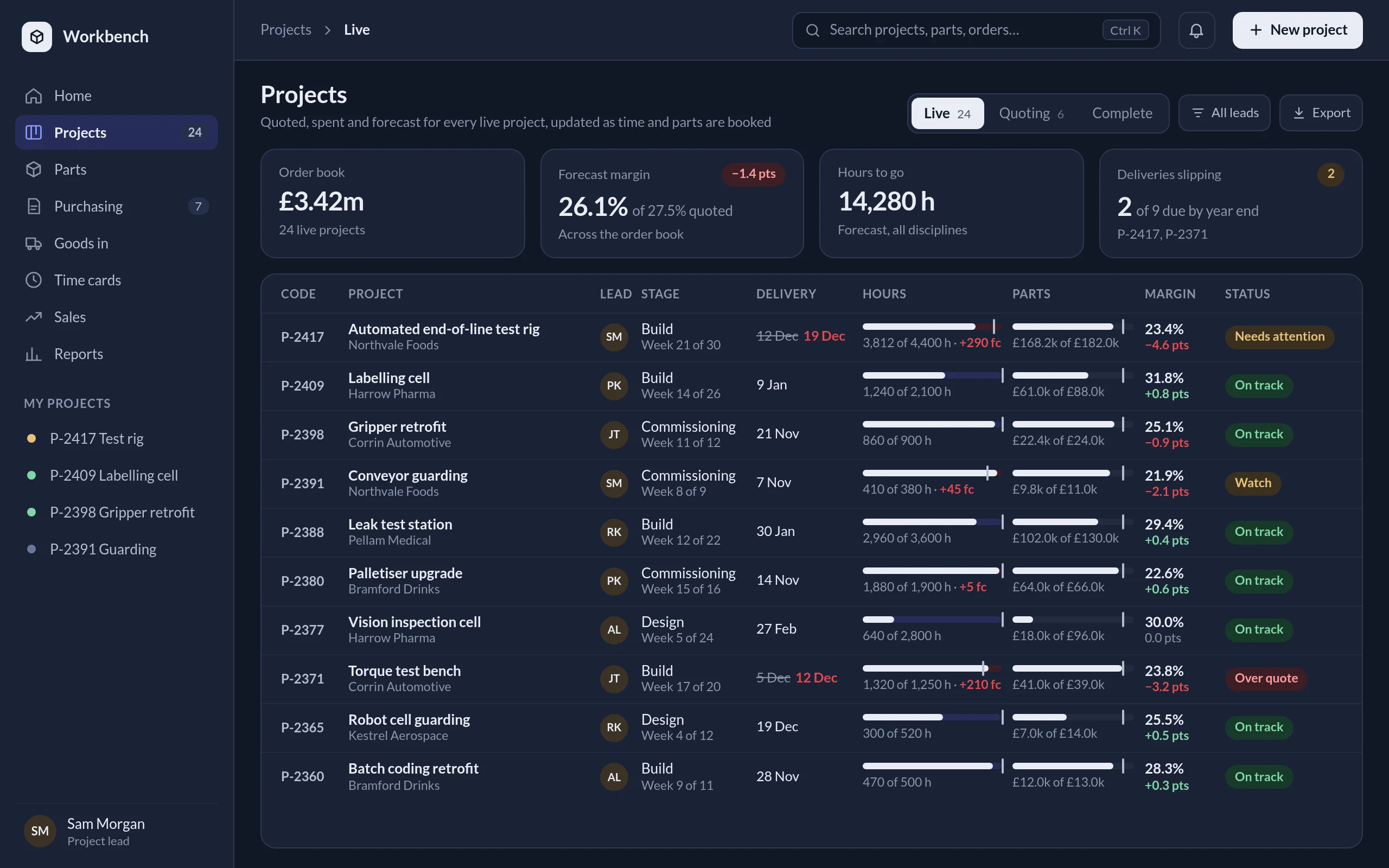
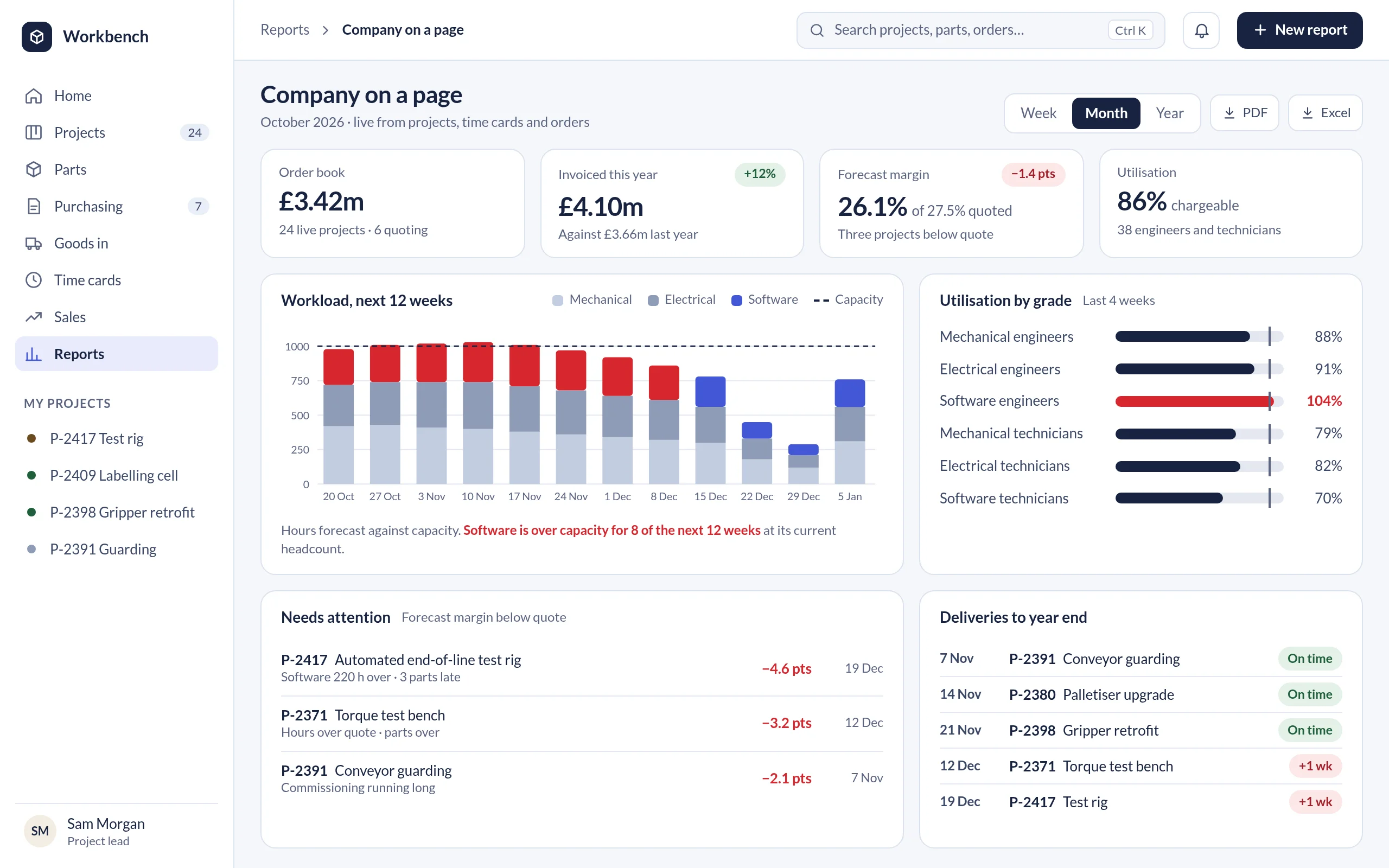
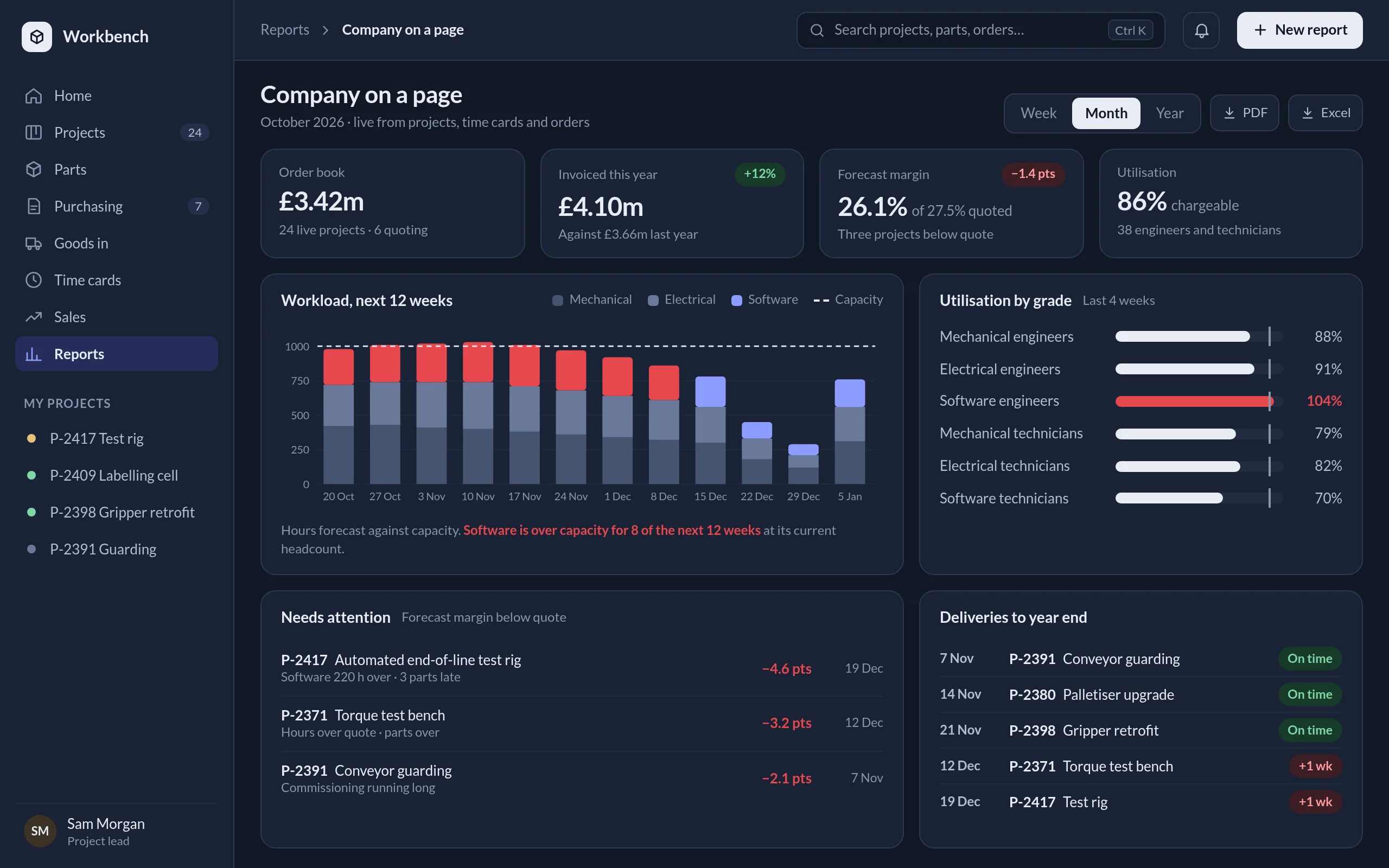
Engineers see their projects, purchasing sees what's outstanding, and directors see the whole company on a page.
- Utilisation by grade and by type of work
- Outstanding deliveries and invoices, by project or by supplier
- Company, project and resources, each on a single page
- Anything can go out to Excel
The details that make it work
Less visible than the headline features, but they're why people trust it.
The right access for each role
Around forty permissions, down to individual reports, grouped so new starters get the right access straight away.
Two-step sign-in
A code by email on sign-in, and a record of where each sign-in came from.
Totals that keep themselves current
Project totals are recalculated in the background, more often when the system is busy, so figures are never stale.
Any currency
Prices held in the supplier's currency and in pounds, with carriage shared fairly across the lines of an order.
Import and export
Projects, parts, people and time can be brought in from spreadsheets in bulk, and any list goes out to Excel.
Documents ready to send
Purchase orders, supplier quote requests and drawing issue sheets, laid out and ready to print or email.
Built in 2018. Still current.
Software used every day has to keep up. This system has grown year by year, and when its interface started to show its age, we rebuilt it without interrupting the work.
- 2018 Launched Replaced the old job system, bringing years of earlier orders and history across.
- 2019 Closing the books A time card cut-off, so accounts can freeze past weeks.
- 2024 A new interface Rebuilt from the ground up and relaunched, keeping every record.
- 2025 Modern foundations New cloud hosting, with over 4,000 automated tests checking every change.
- 2026 What's next A move to an open-source database, under way now.