Every enquiry, every hour of support, ready for the funder.
NIHR-funded research support teams help researchers turn ideas into funded studies, and account for every hour of that help to the funder. We build the systems they work in, from a researcher's first enquiry to the annual return.
- Clients
- NIHR research support services and NIHR-funded research centres
- Used by
- Advisers, triage teams, directors, review panels and the researchers they support
- Replaced
- Shared inboxes, spreadsheets and a decade-old case system
- Looked after
- Live since 2023, with a new system for each service that joins
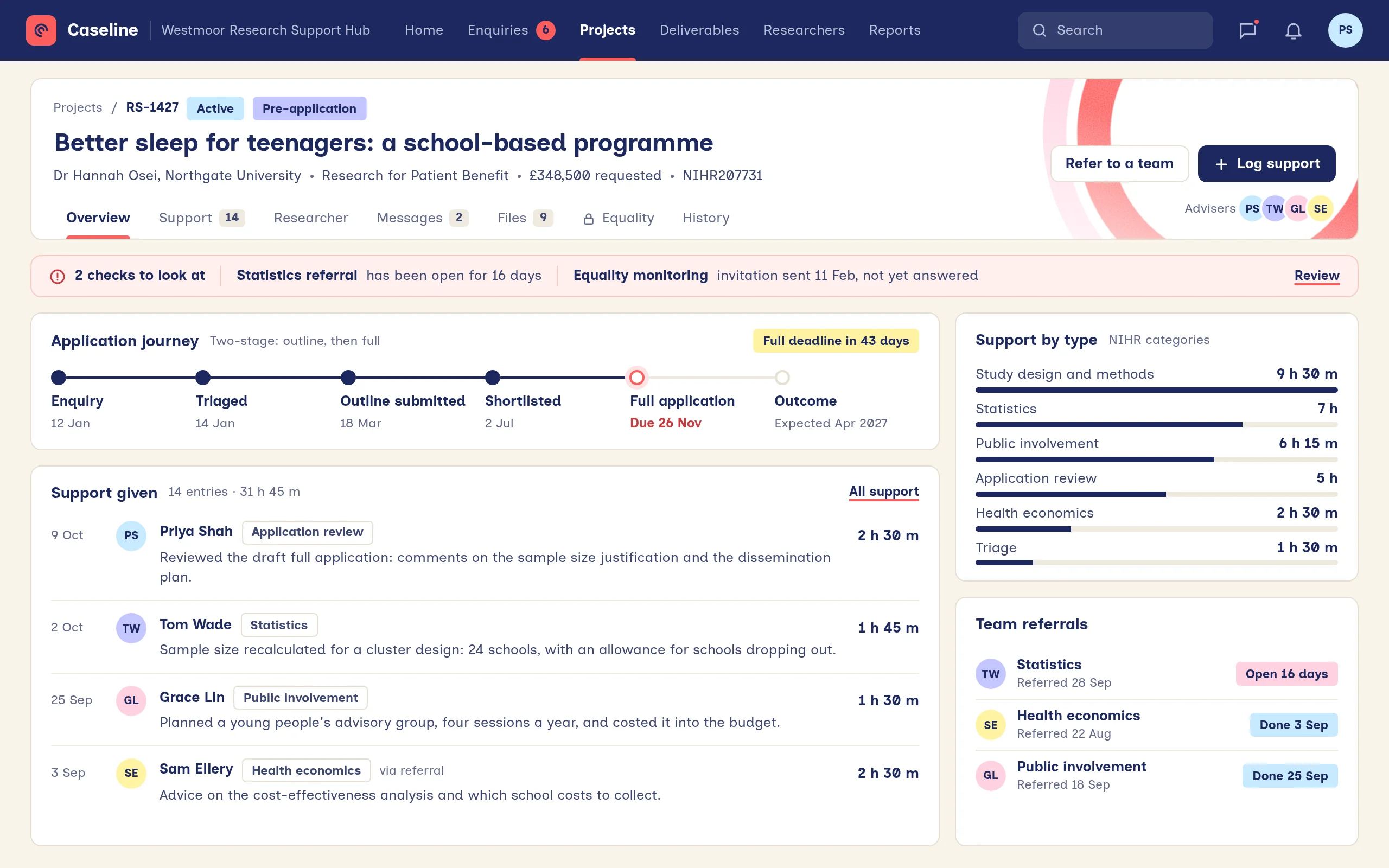
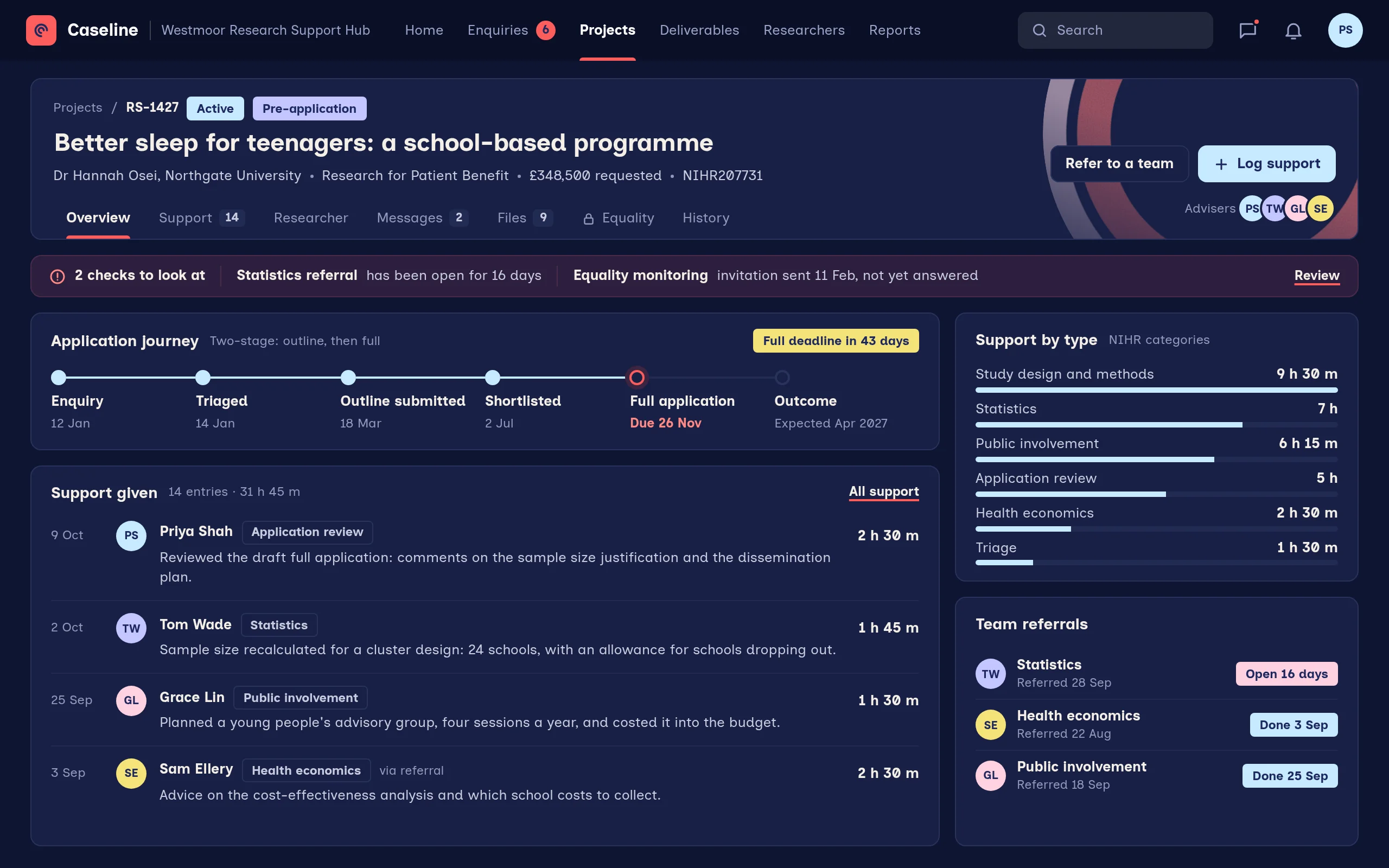
The systems at a glance
Figures from the systems in use today, including history brought across from the systems they replaced.
The work is advice. The funding depends on proving it.
A support team might help hundreds of researchers a year with study design, statistics, public involvement and the application itself, often over many months and across several specialist teams.
The funder asks for all of it back: who was helped, how, for how long, at what stage, and what happened to the application. When that lives in inboxes and spreadsheets, every quarter ends in a scramble to piece it together, and nobody is sure it's complete.
One place for the work, and the reporting comes from it.
Enquiries arrive through a public form and become projects at triage. Advisers log support as they give it, against the funder's own categories, and every change is recorded.
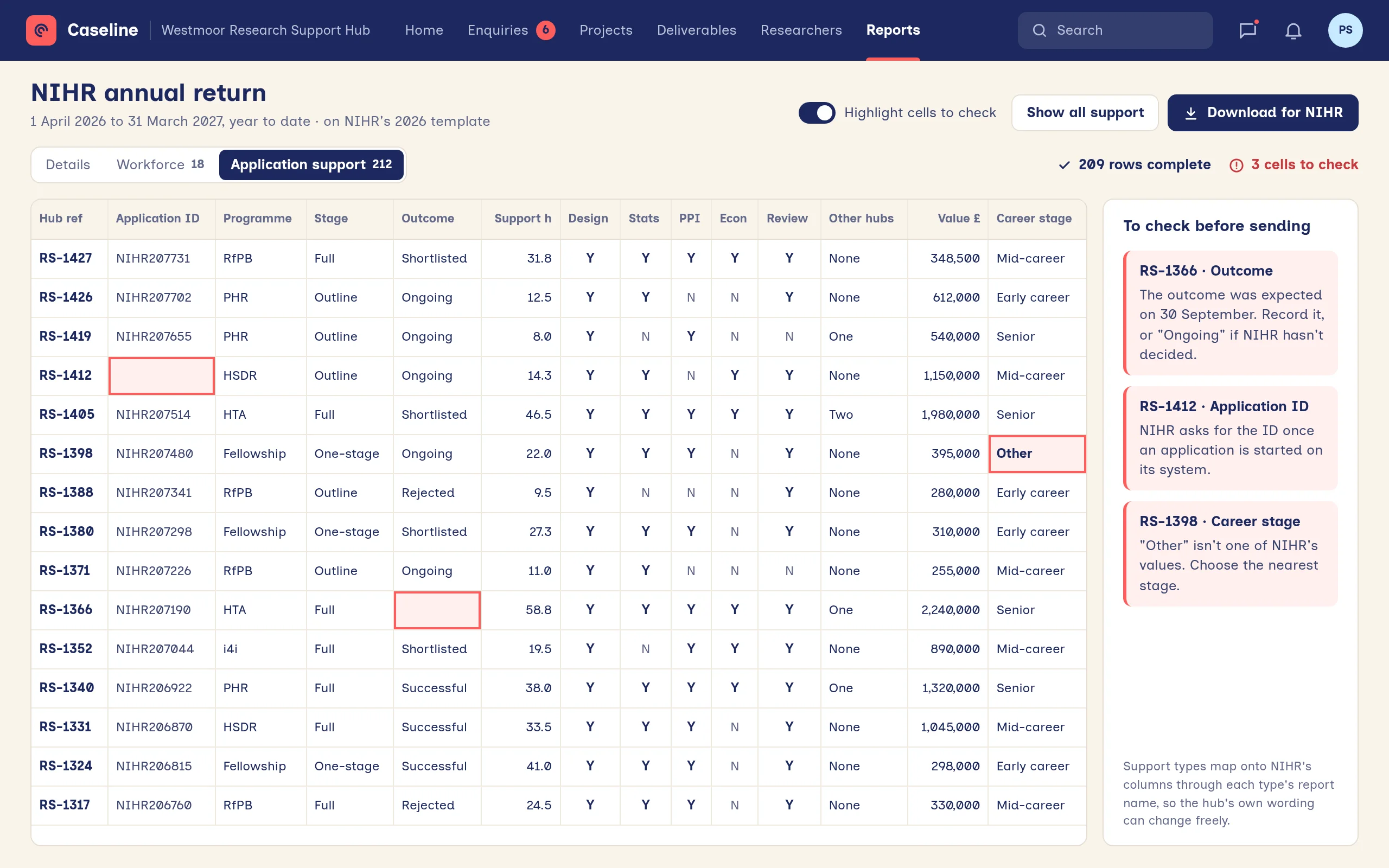
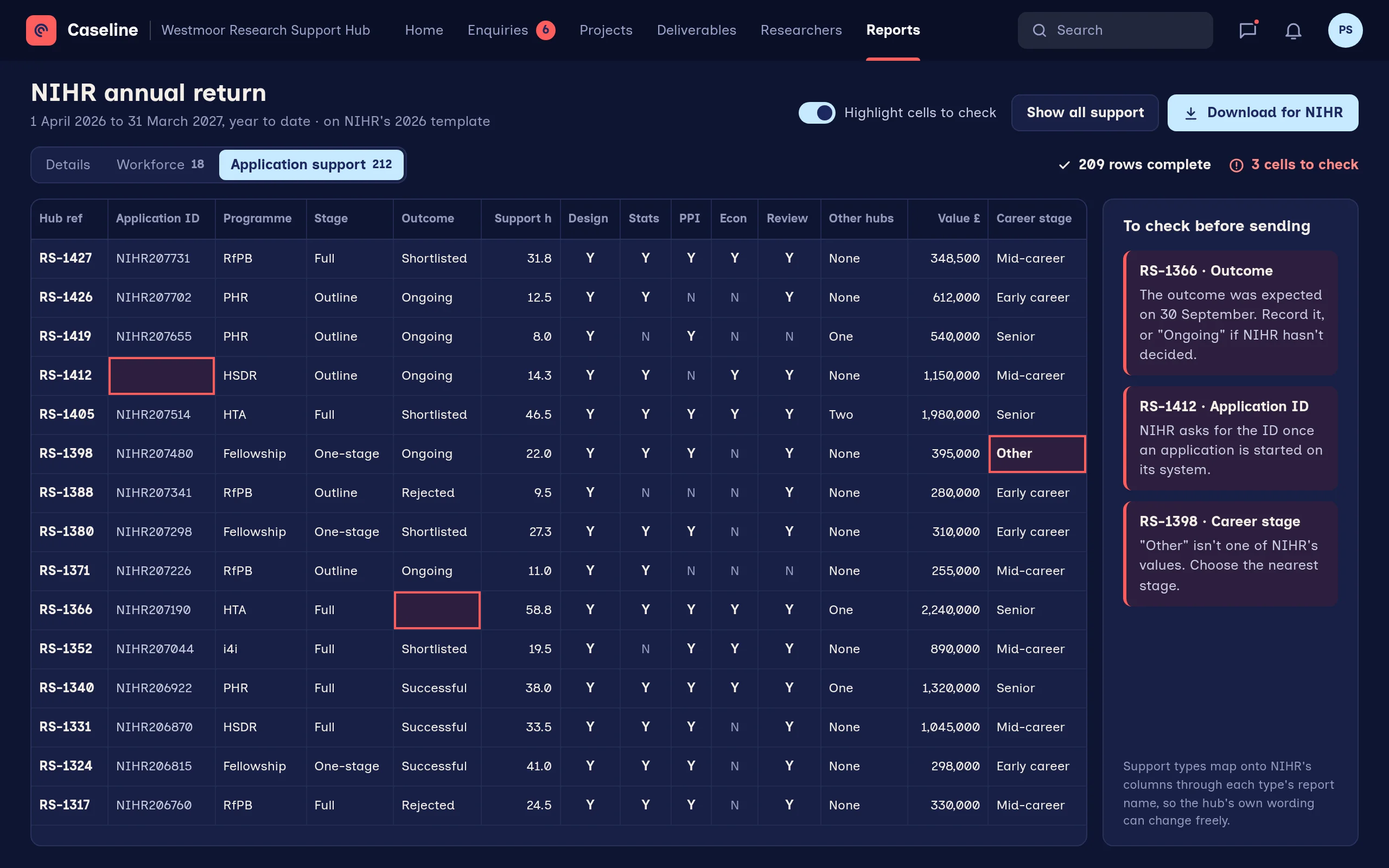
Managers see the whole service on dashboards they design themselves, researchers follow their own projects through a private portal, and the funder's return is produced in one click, checked cell by cell before it goes.
What it does
The whole life of a case, from the first enquiry to the funder's outcome, in one place.
Every enquiry captured, and nothing typed twice
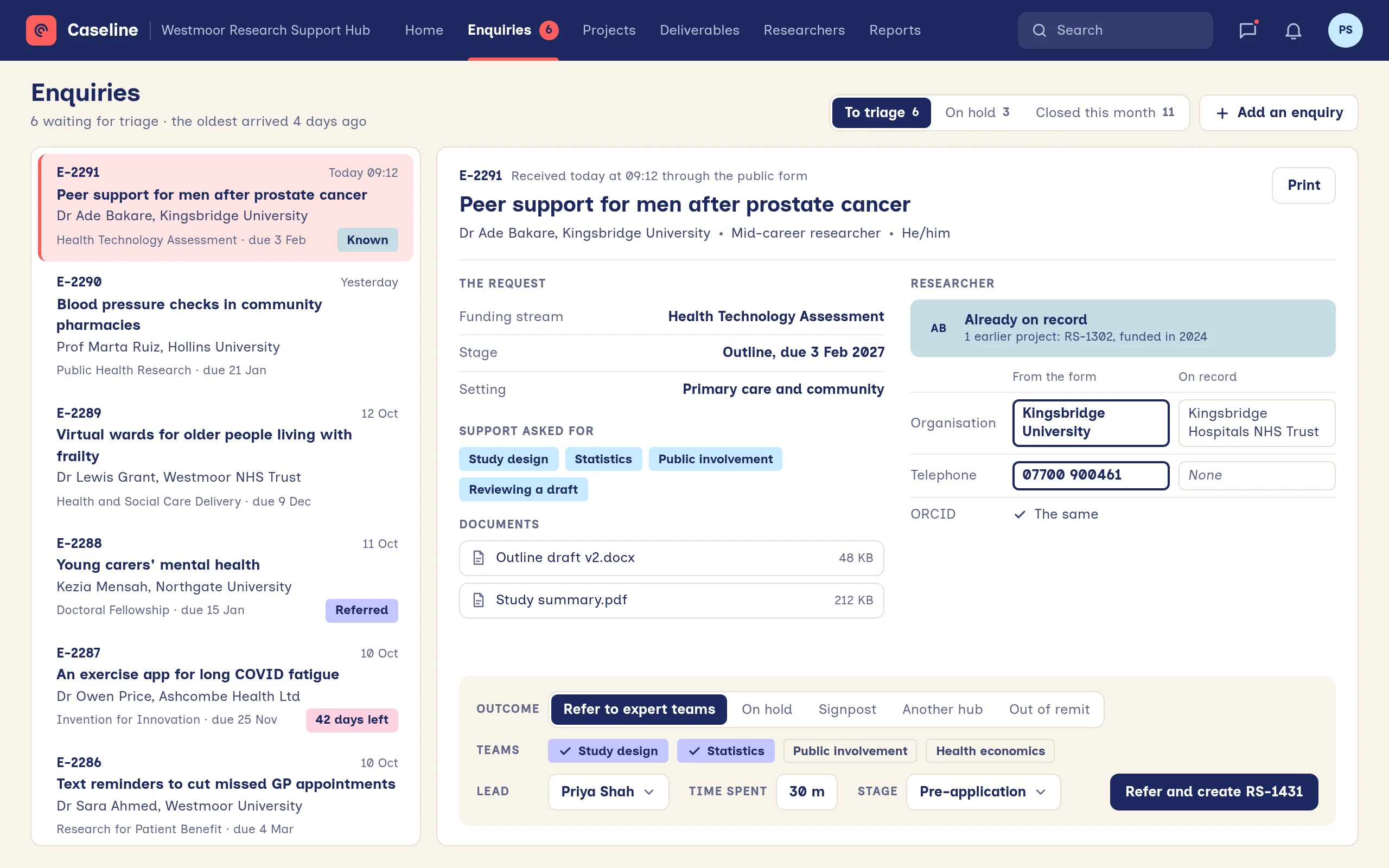
Researchers ask for help through a public form. The triage team decides what happens next, and an accepted enquiry becomes a project with everything carried across.
- A public form with document upload and an automatic acknowledgement
- Incoming details checked against researchers already on record
- A recorded outcome for every enquiry, including referrals to other services
- Referral to a specialist team creates the project and tells its leads
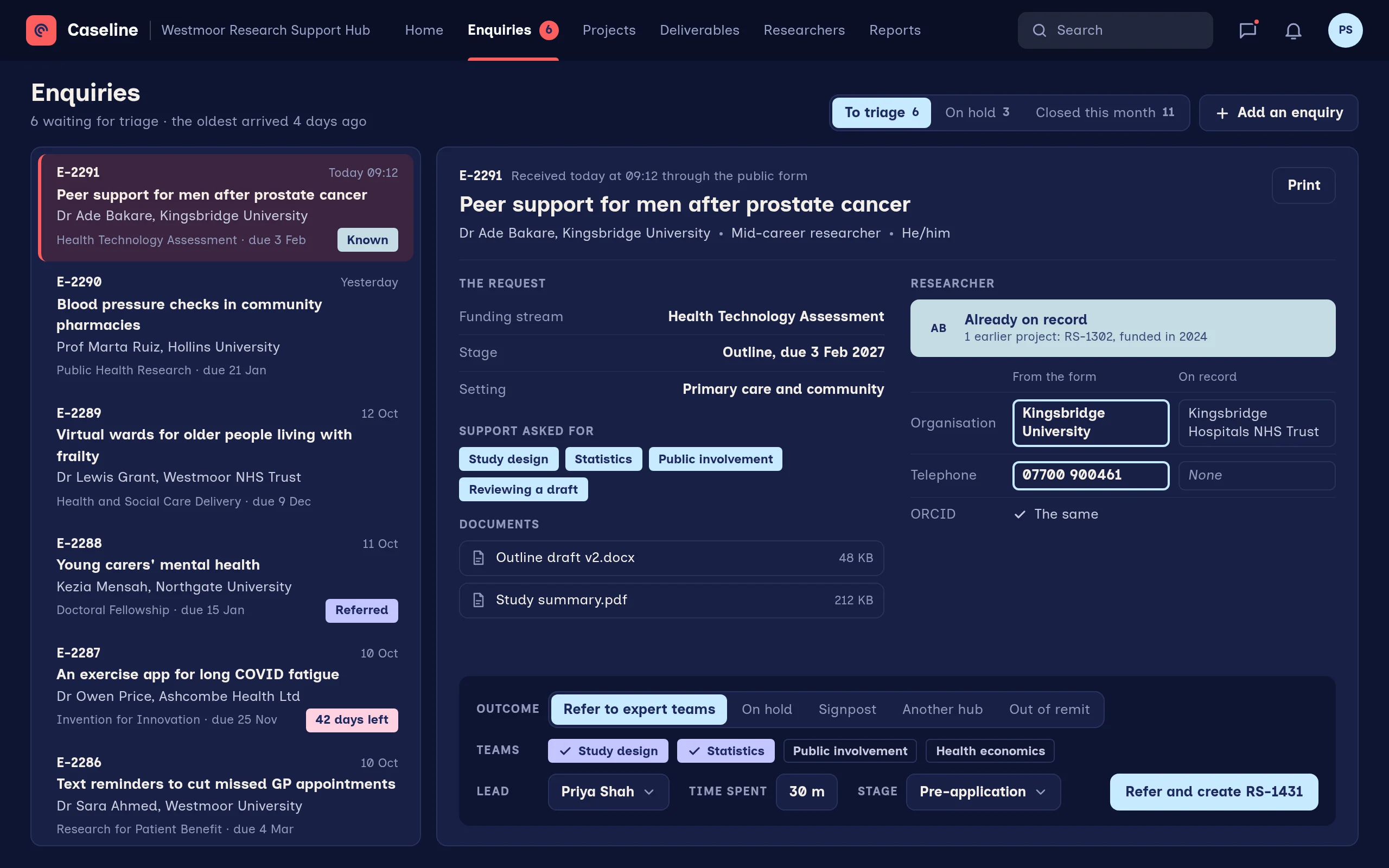
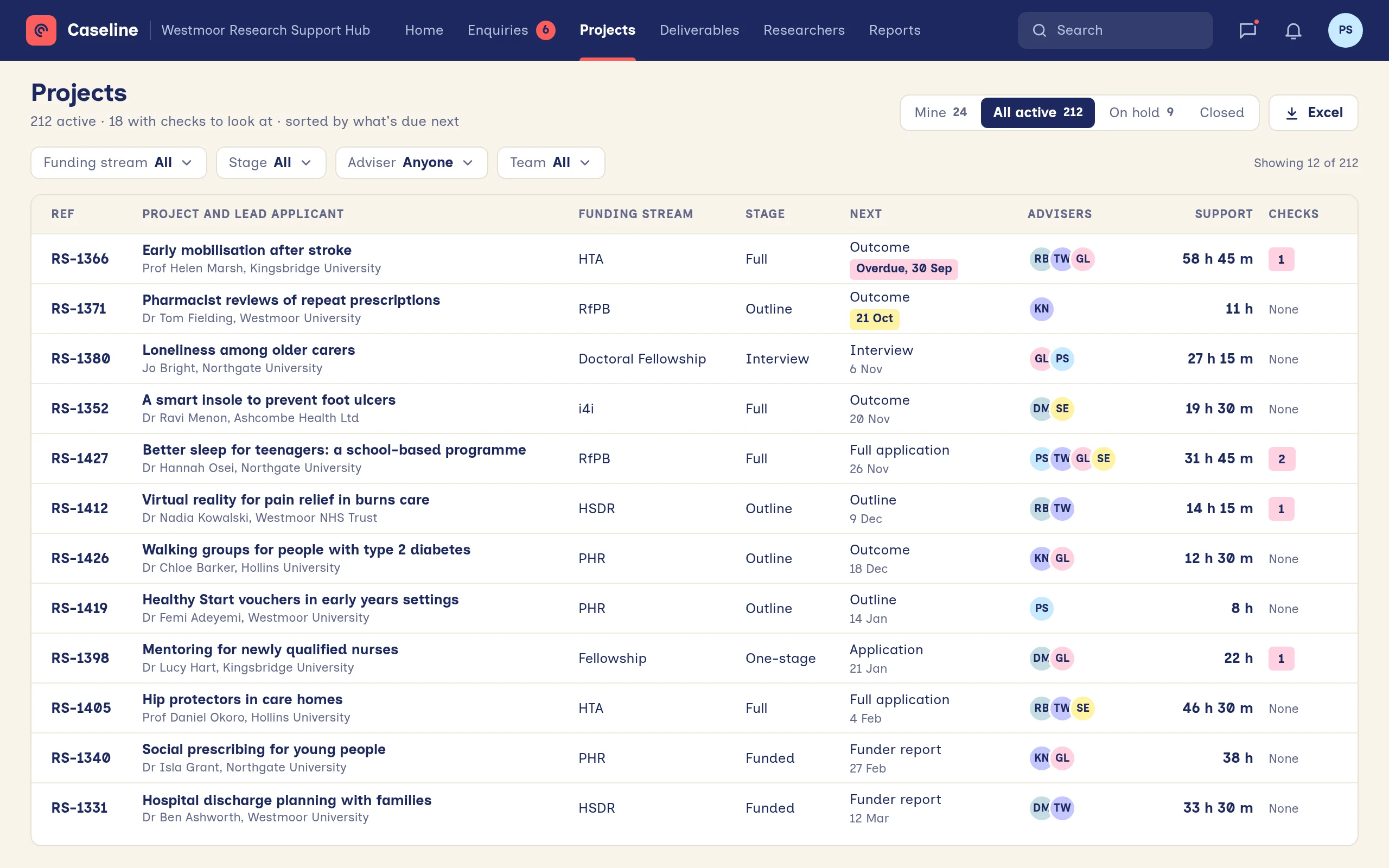
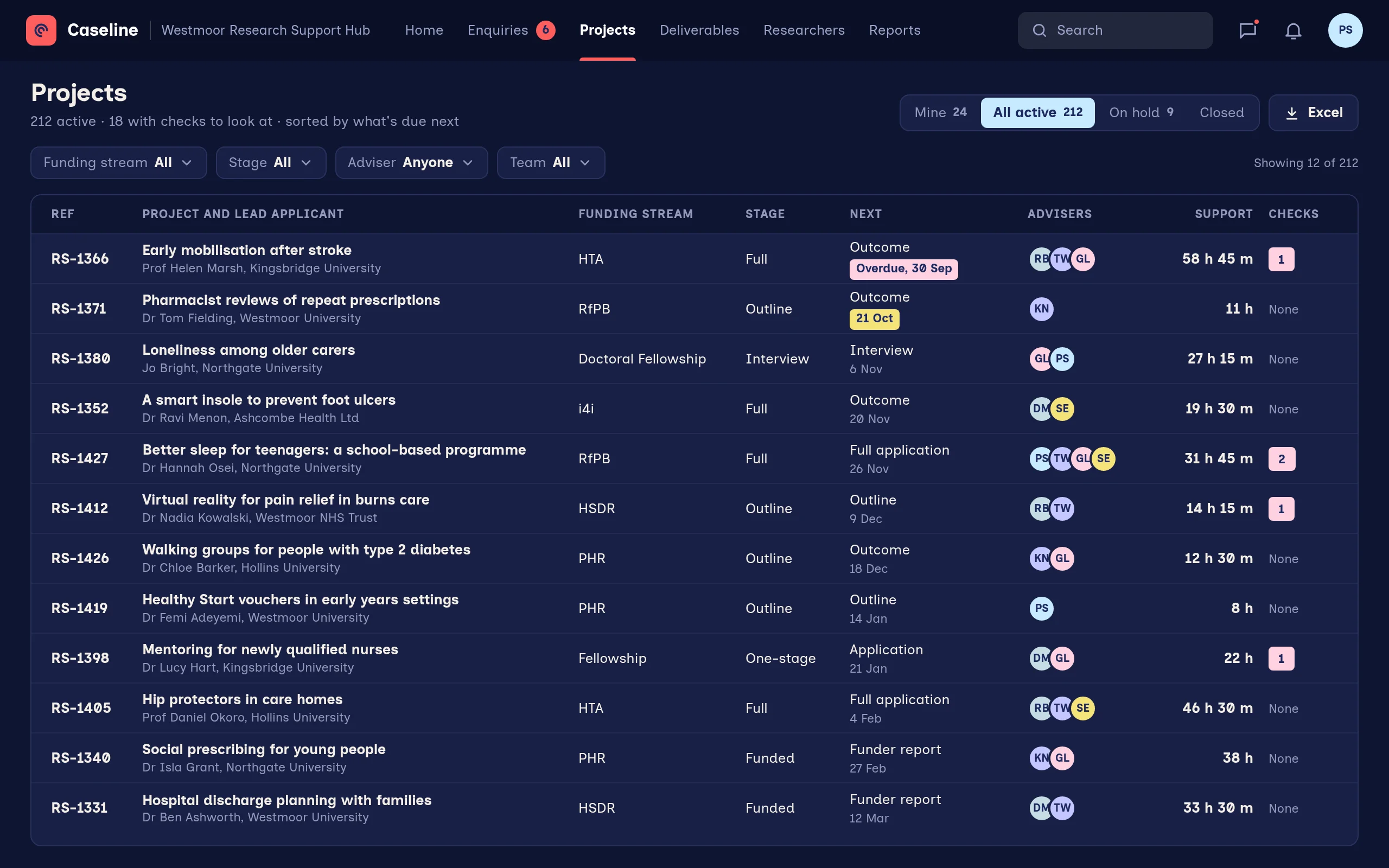
A complete record of the help given
Each project holds its funding, deadlines and outcome, the advisers working on it and every piece of support, logged as it happens rather than remembered at the end of the quarter.
- Support logged with time, advisers, teams and the funder's own categories
- Referrals between specialist teams, with anything overdue flagged
- Gentle checks: "the deadline has passed, was it submitted?"
- Files, reminders and a full history of every change
Researchers in the loop, not in an email chain
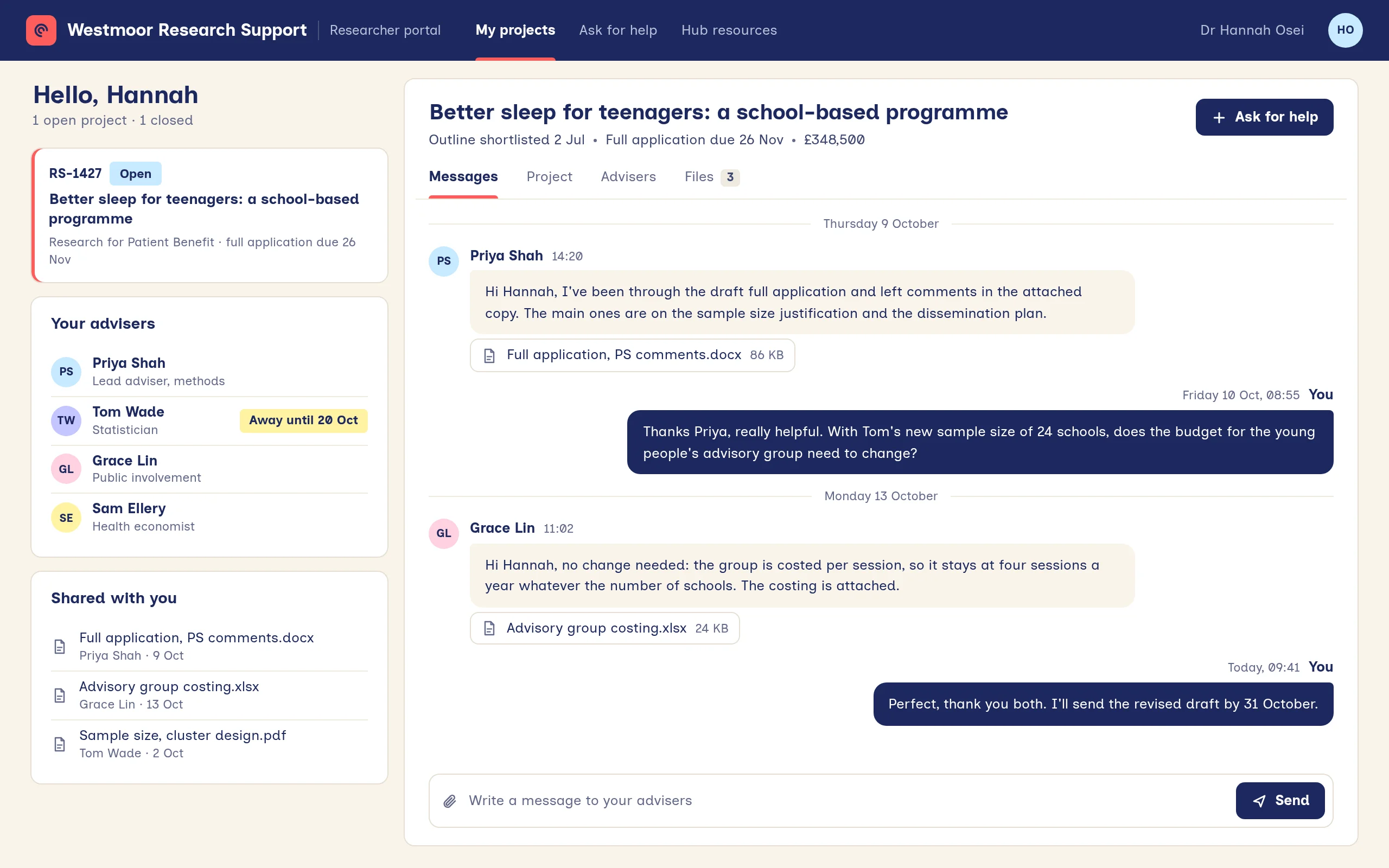
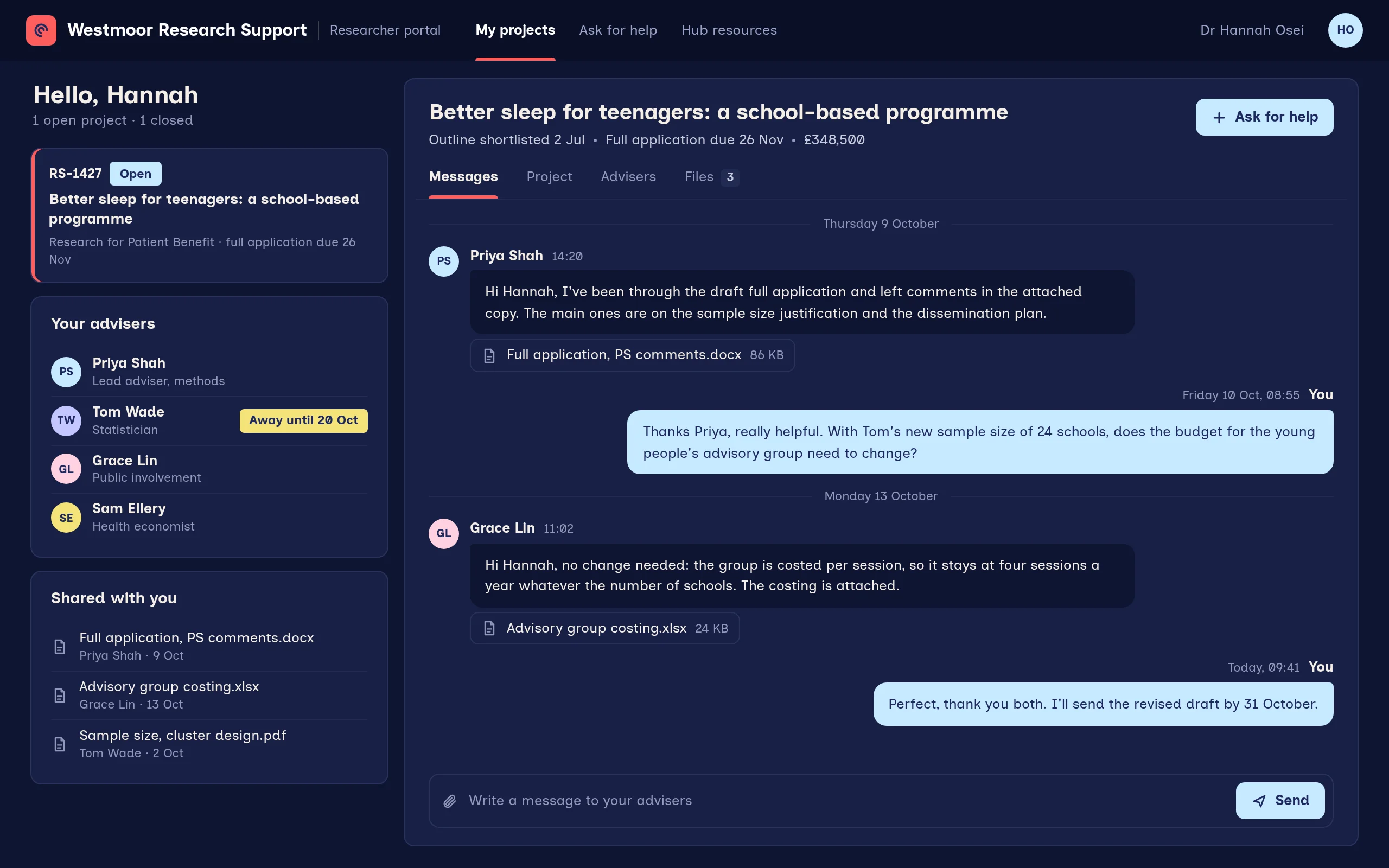
Researchers sign in to their own private dashboard to follow their projects and talk to their advisers, so the conversation stays with the case and every member of the team can see it.
- Open and closed projects, with deadlines, status and their advisers
- One message thread per project, with attachments, updated within seconds
- Requests for help suited to the researcher's funding stream
- A daily digest for advisers, so no message waits unseen
Promises tracked to the date they're due
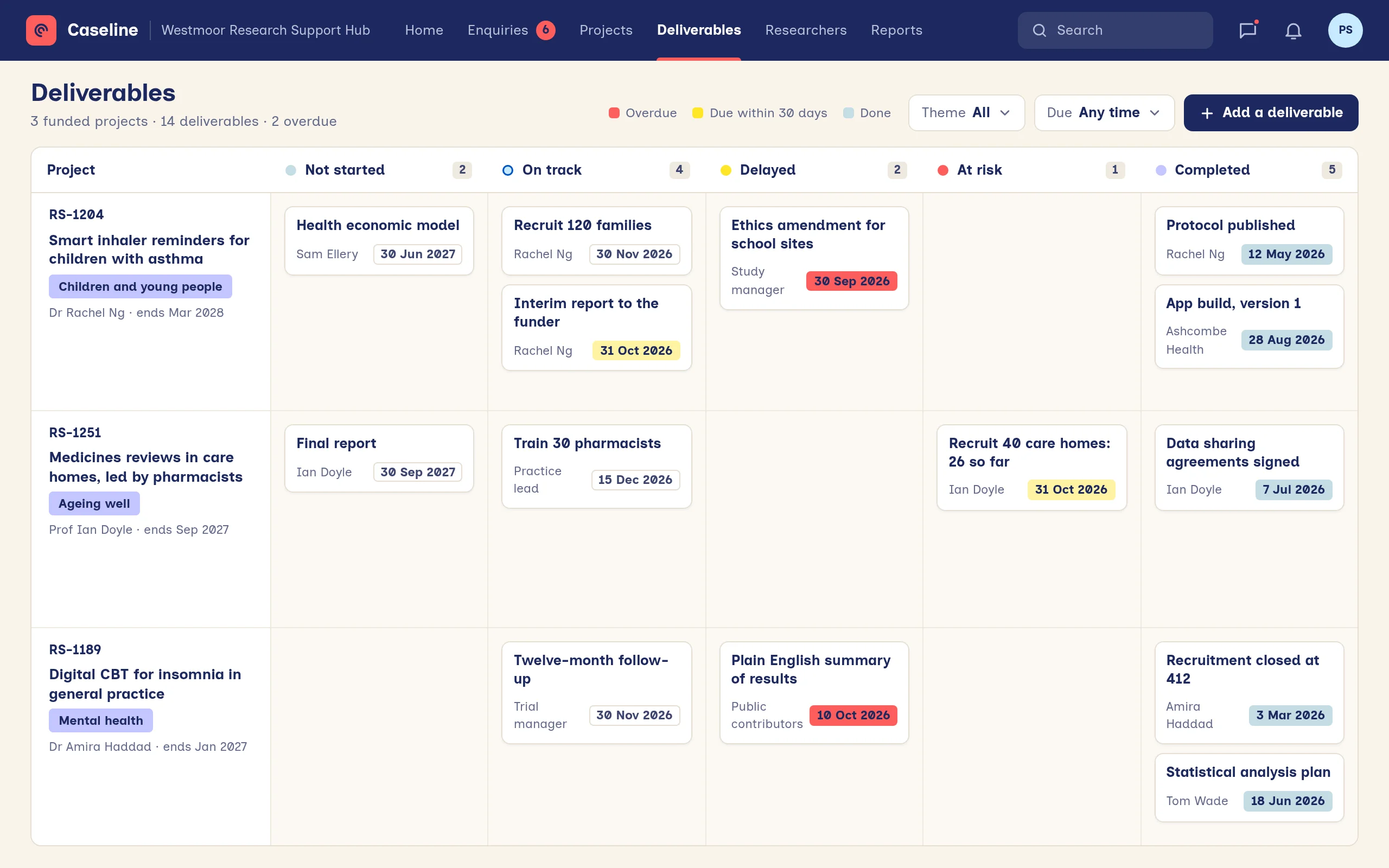
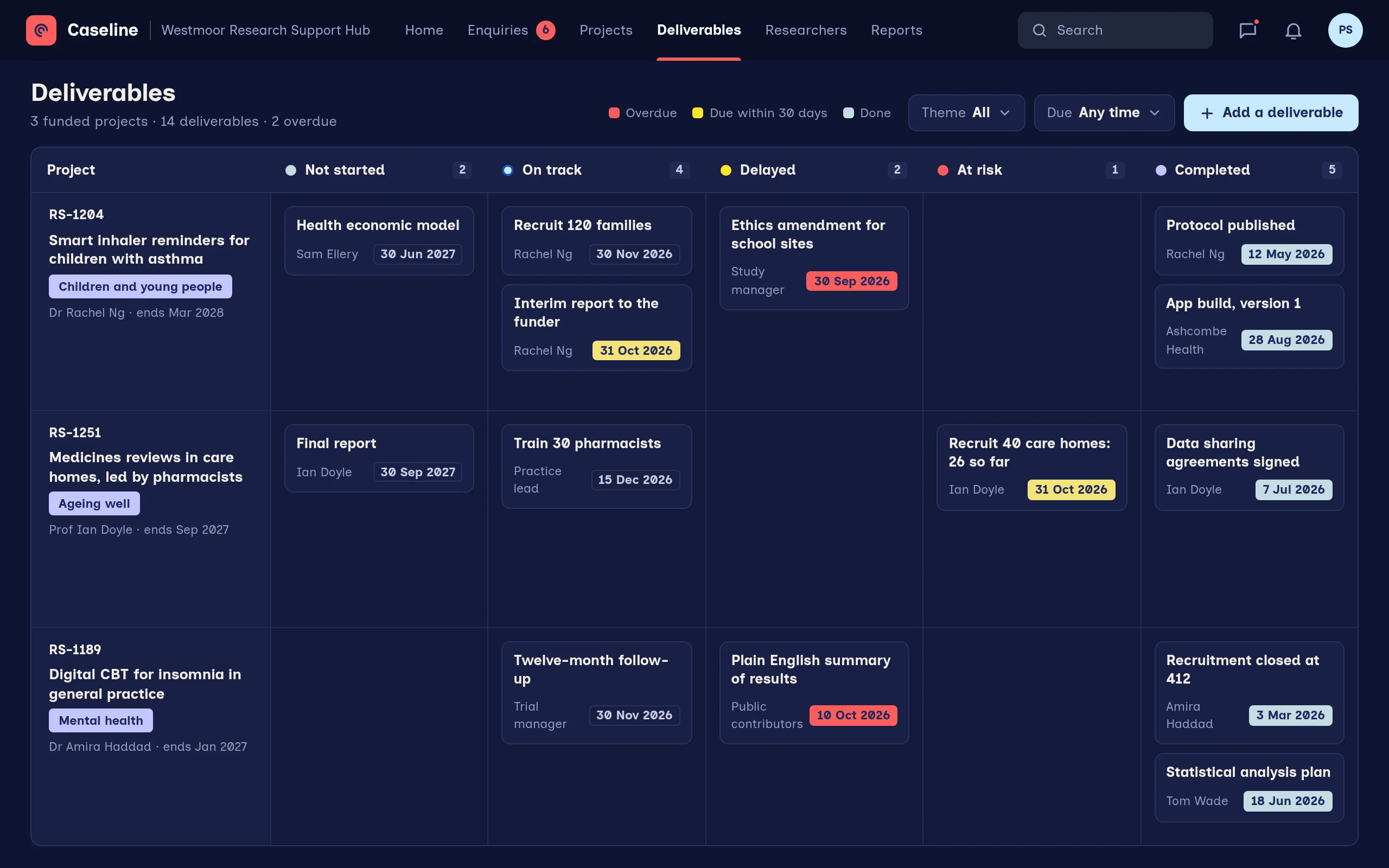
Funded projects commit to deliverables. Each one has an owner, a date and a status, and a board shows the whole portfolio at once, so slipping work is seen early.
- Deliverables broken down as far as the project needs
- On track, delayed or at risk, with a dated log of updates
- A board across every project, filtered by theme or by what's due soon
- Applications scored by a review panel before they become projects
The whole service on one screen, arranged your way
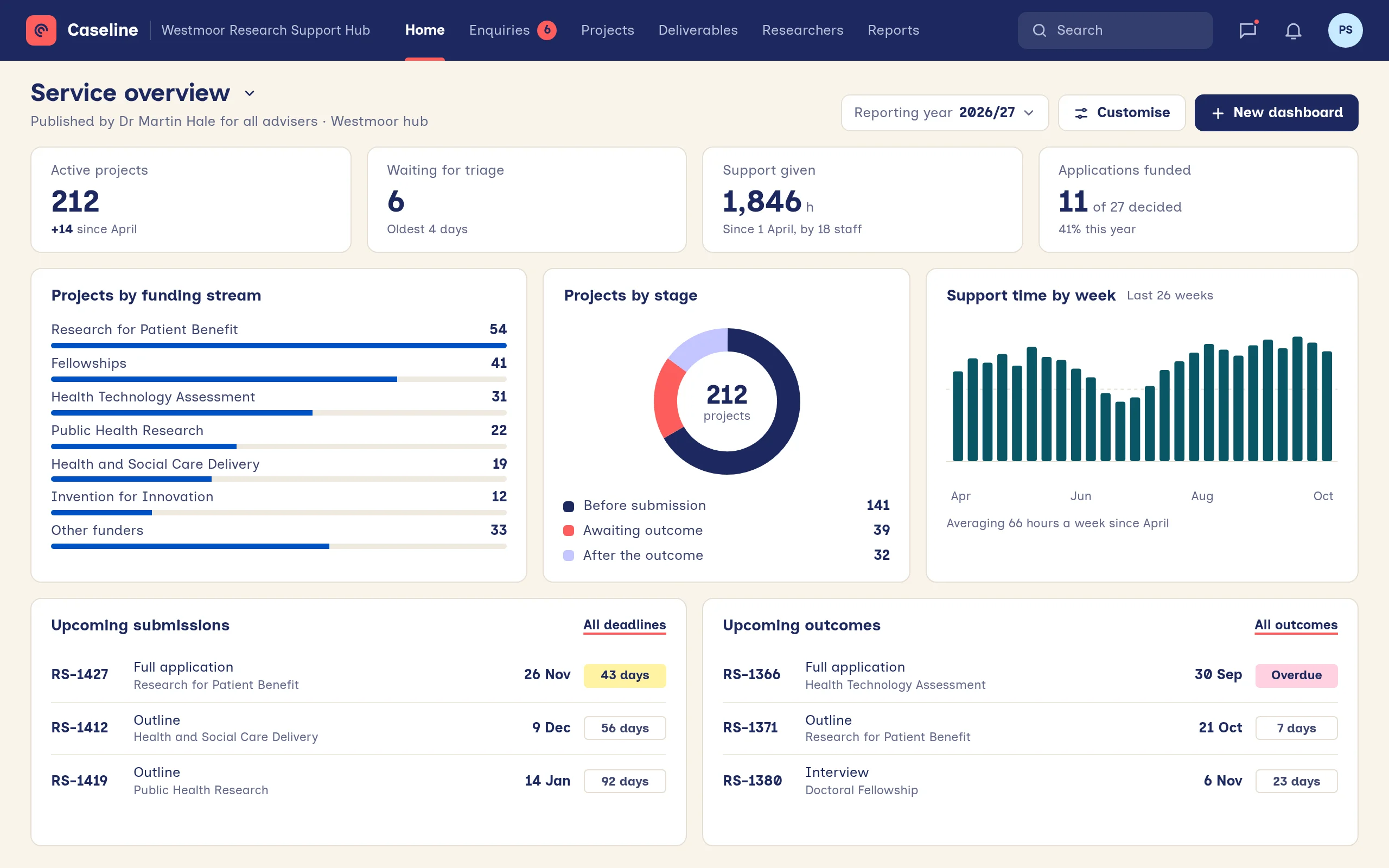
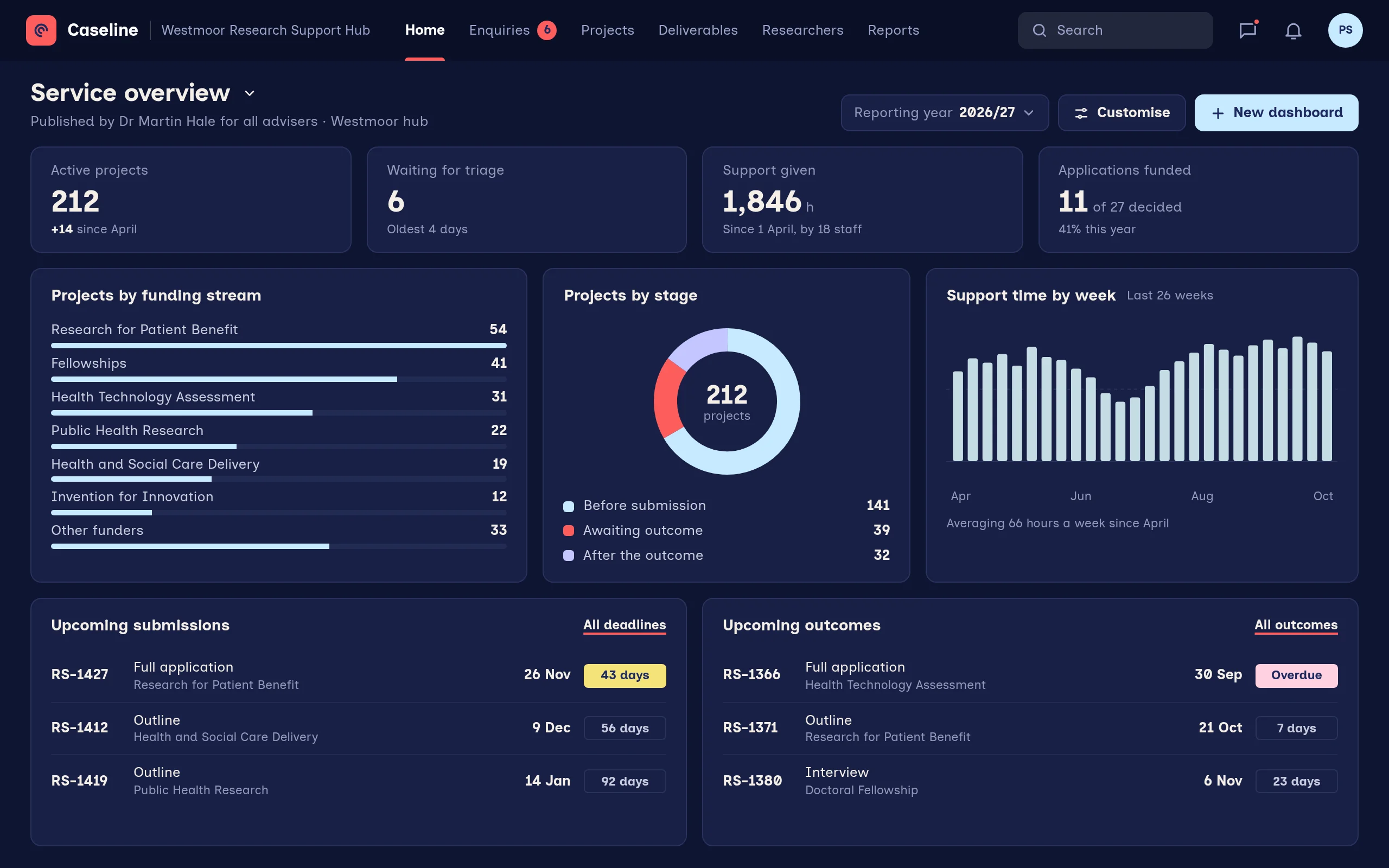
Everyone builds the dashboards they need from a library of charts and figures, and any figure opens the records behind it. Directors see the service, advisers see their own work.
- Drag-and-drop layouts that work on any screen size
- Projects by funding stream, stage or outcome, and support time by week
- Shared starting points that fill in "me" for whoever uses them
- Each person only ever sees the data they're allowed to
The return writes itself, and checks itself first
Because the work is recorded as it happens, the NIHR return comes straight from it, on the funder's own template. Anything else can be built in the report designer, without asking us.
- The annual return in one click, with every cell checked before it's sent
- Local categories mapped to the funder's, so wording changes don't need us
- A report designer with filters, totals and dates like "this reporting year"
- Reports emailed on a schedule, and a secure feed into Power BI
The details that make it work
Less visible than the headline features, but they're why services and funders can rely on the figures.
Equality data kept apart
Equality, diversity and inclusion answers sit behind their own permission, and never appear in reports or exports for anyone without it.
Asked of researchers directly
Researchers answer the equality questions through a private link, and advisers can chase a reply without ever seeing the answers.
Power BI without the risk
A read-only feed for Power BI, with keys the service issues and withdraws itself, and no personal or equality data in it at all.
How quickly help arrives
Time from enquiry to triage, to first contact and to first support, and each adviser's workload adjusted for their hours.
Partners and the public
Partner advisers and public contributors keep their own profiles up to date through a link, and anyone can find the right expertise for a project.
Panel review built in
Reviewers score applications against set criteria and see only what they've been asked to score, while the team sees every score side by side.
A history of every change
Every save records who changed what, field by field, and every email the system sends is logged and can be sent again.
Run by the service, not by us
Funding streams, support types, email templates, form wording and who can see what are all changed in the system by the team itself.
Big reports, no slowdown
Large reports are worked through in small steps in the background, so one person's year-end report never slows the system for everyone else.
Built alongside the services that use it.
Funders change their templates and priorities, and the systems change with them. Each new service has started from what the others already do, and added something of its own.
- 2011 Where it started A shared case system for NIHR research design services, in use for more than a decade.
- 2023 A new national service Live for the first research support hub within weeks of NIHR's new service starting.
- 2024 Researchers join in A private portal with messaging, a report designer and the NIHR annual return.
- 2025 From idea to funded project A research centre's pipeline, with panel review and deliverables tracking.
- 2026 Seeing the whole picture Dashboards built by users, a Power BI feed, and the new NIHR return template.